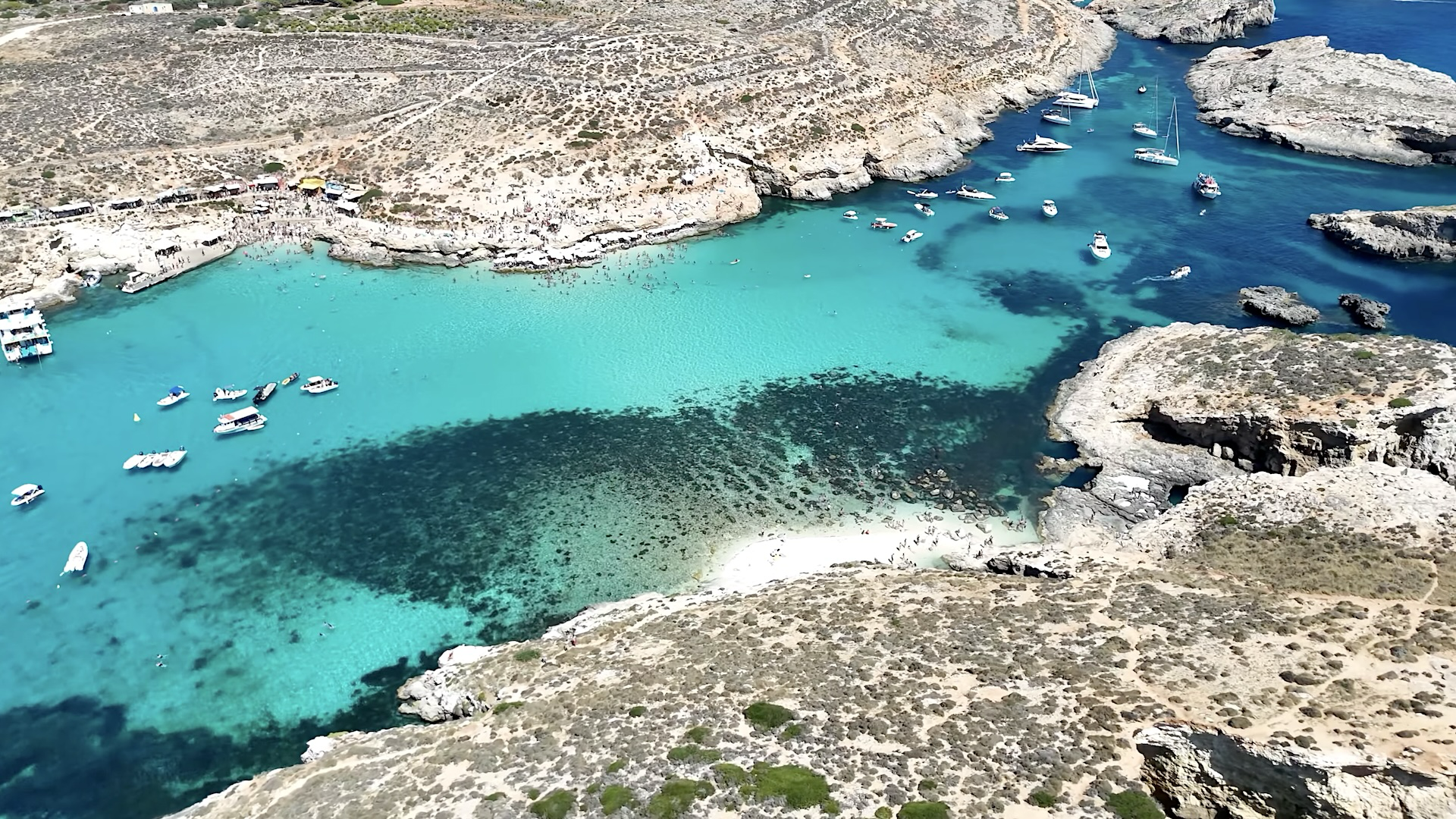
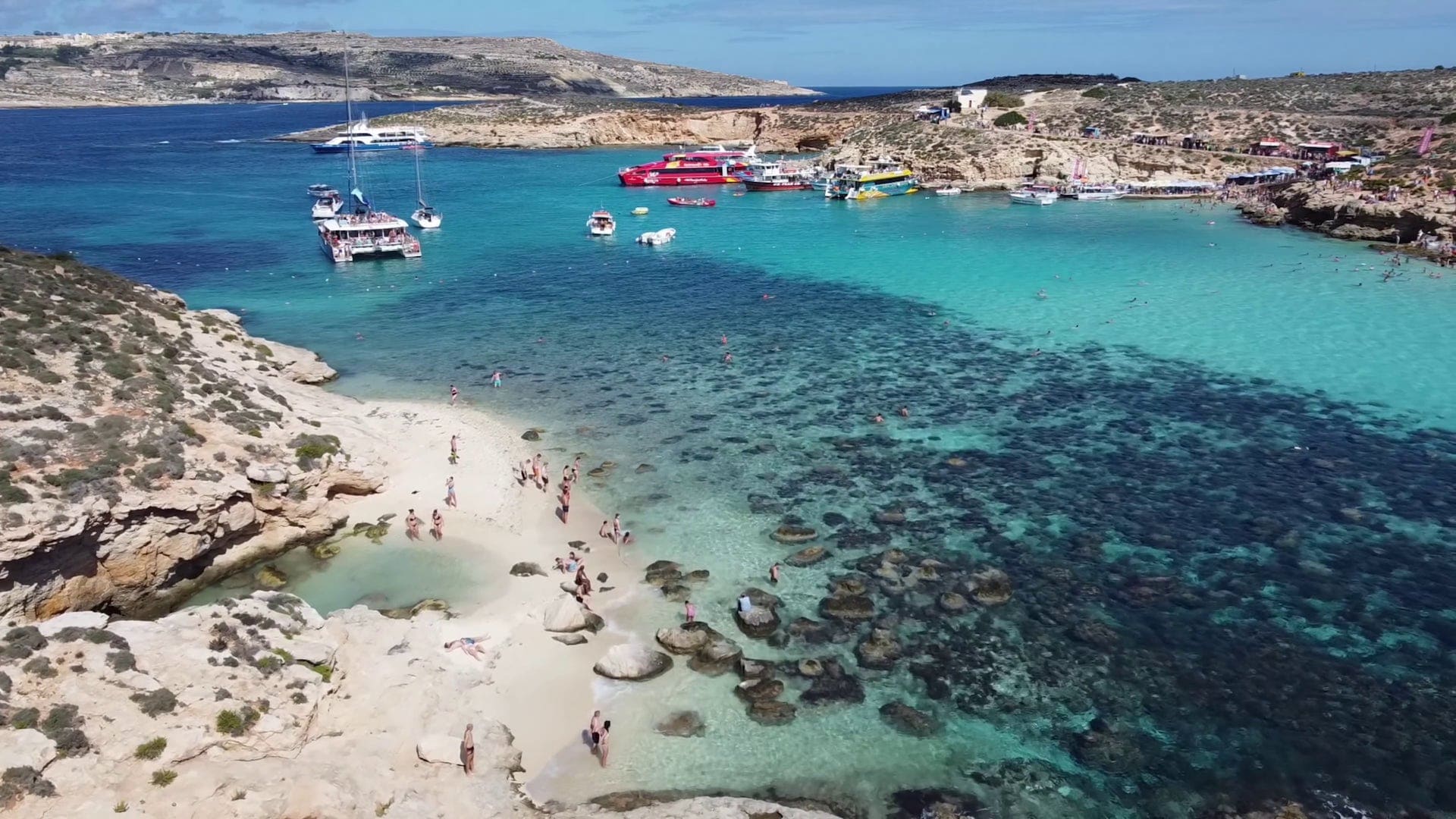
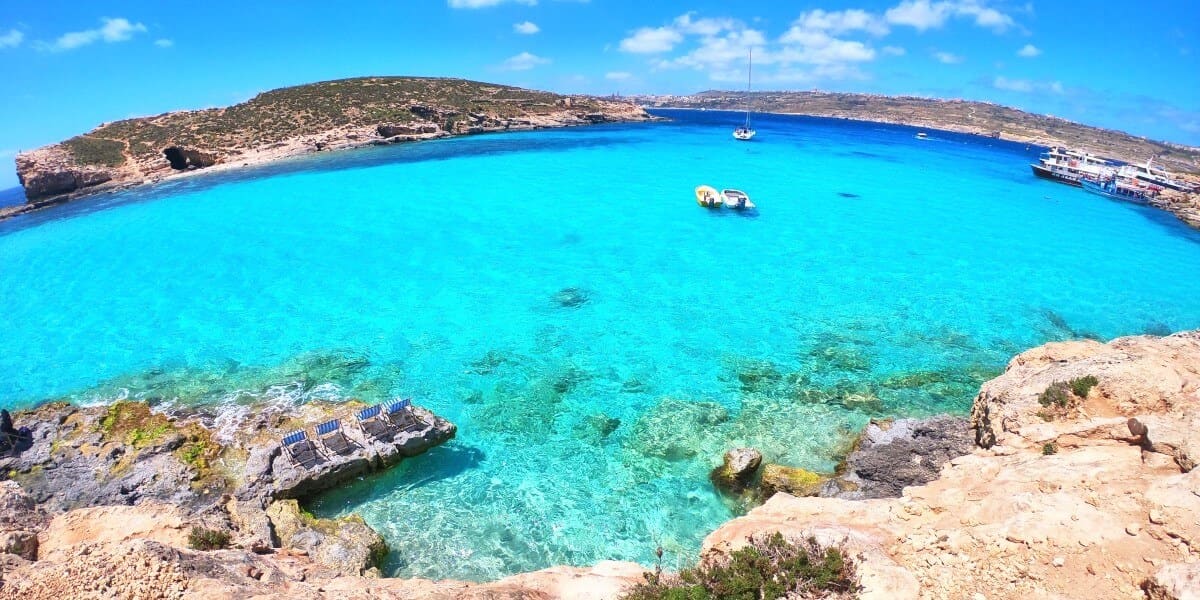
The Blue Lagoon is one of Malta’s most iconic sights. Tucked between the islands of Comino and Cominotto, this turquoise-water channel has become a must on any trip to the archipelago. Here is everything you need to know to visit it at its best.
Swimming lagoon (open air)
Half a day
Free (ferry from €15)
Island of Comino
Our verdict on the Blue Lagoon
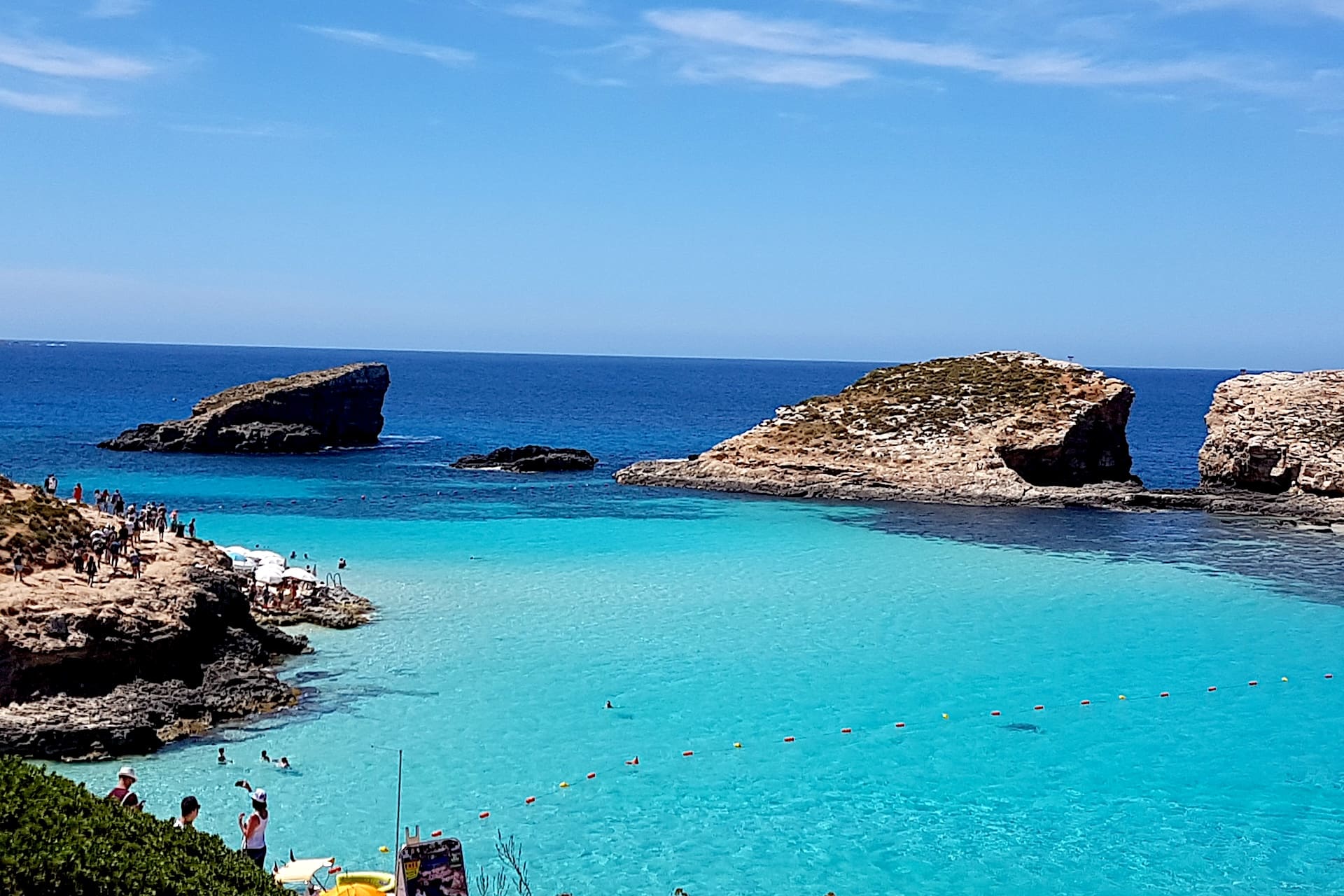
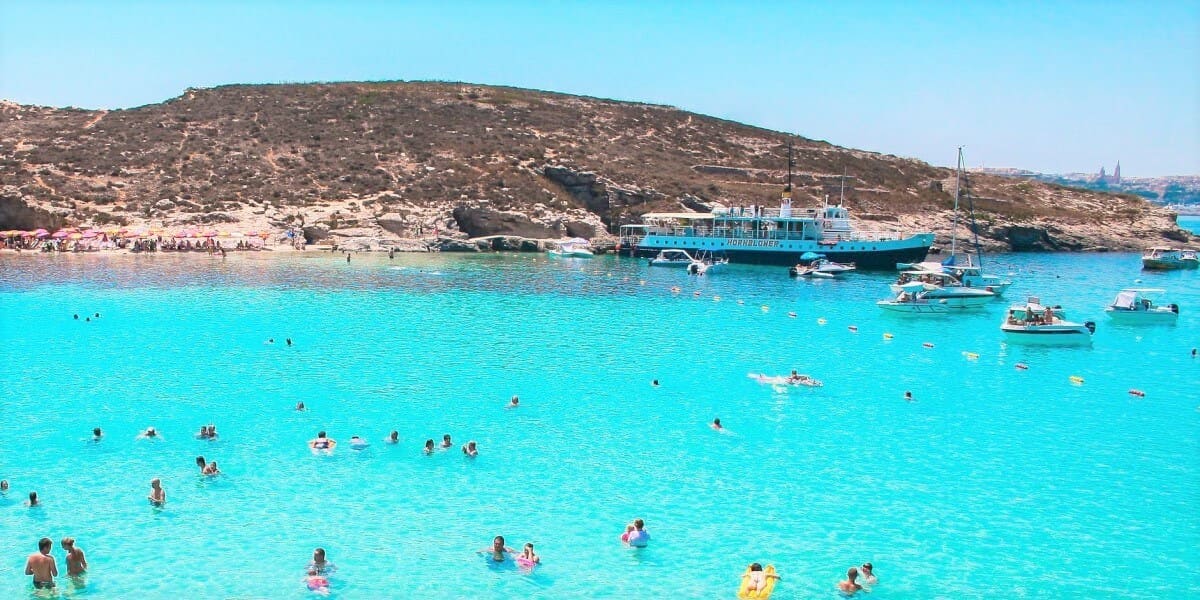
The Blue Lagoon is a one-of-a-kind spot, famous for its shallow, translucent water, a little slice of Maltese Bora Bora. The lagoon has no equal anywhere else in Malta and the site wins everyone over. Where it falls short is that, over the years, the place has become a victim of its own success. This natural gem suffers from an over-commercialisation that tends to spoil it and, as a result, leaves travellers with an experience that falls well short of what they had pictured.
On the first boat, around 8–8.30am, the lagoon is almost deserted and shows its very best face. In summer, once 10am has passed, the shuttles and cruises pour in thousands of passengers, the tiny sandy beach is saturated and you have to queue to get into the water as much as to get back out of it. The 2025 introduction of a cap of 4,000 visitors on site at any one time has slightly improved the experience: before that, in peak season, the lagoon could see close to 10,000 visitors a day land here, which made the site unbearable. On top of the summer crowds, expect a tourist-trap atmosphere: overpriced sunbeds, rows of food trucks, pineapple-cocktail sellers and beach music, the whole thing turning into an open-air theme park.
Our advice: come early or off-season, and favour boat trips, which let you leave your belongings on board and so spare you the fight for a spot on the sand. Move away from the centre of the lagoon too: walk a little and you reach the rest of the island of Comino and far quieter bays such as Santa Marija.
What we love
Turquoise, crystal-clear, shallow water with no equal anywhere else in Malta
Easy swimming in a calm, warm pool, lovely with the family
The boat crossing, short and pretty, often passing in front of the Comino caves
Rewarding snorkelling thanks to the clarity of the water, especially on the Crystal Lagoon side
Trails that lead, as soon as you get away, to far more peaceful coves such as Santa Marija
Free access to the shore, once you have your online booking
What to know before you go
Overtourism in high season: beach overwhelmed by mid-morning, queues to get into the water
Overpriced sunbeds and parasols (€30 to €35 a set) and impossible to find in the afternoon
Food trucks, roving vendors and beach music that spoil the setting
No natural shade beyond the paid parasols
Getting into the water can be awkward: rocks and steep steps outside the small pool
Free toilets, but often crowded
Booking your Blue Lagoon visit
Since 1 May 2025, access to the Blue Lagoon has been governed by a booking system designed to protect the site. To land on the lagoon beach, every visitor must show a ticket with a QR code, obtained free of charge in advance from the official Comino website. Without this QR code, you will be refused access to the Blue Lagoon shore.
Booking is free, but the number of daily places is limited, so it is strongly advised to book your slot as early as possible, especially in high season. If you go for an organised cruise, check with the operator whether the booking is already included in your ticket.
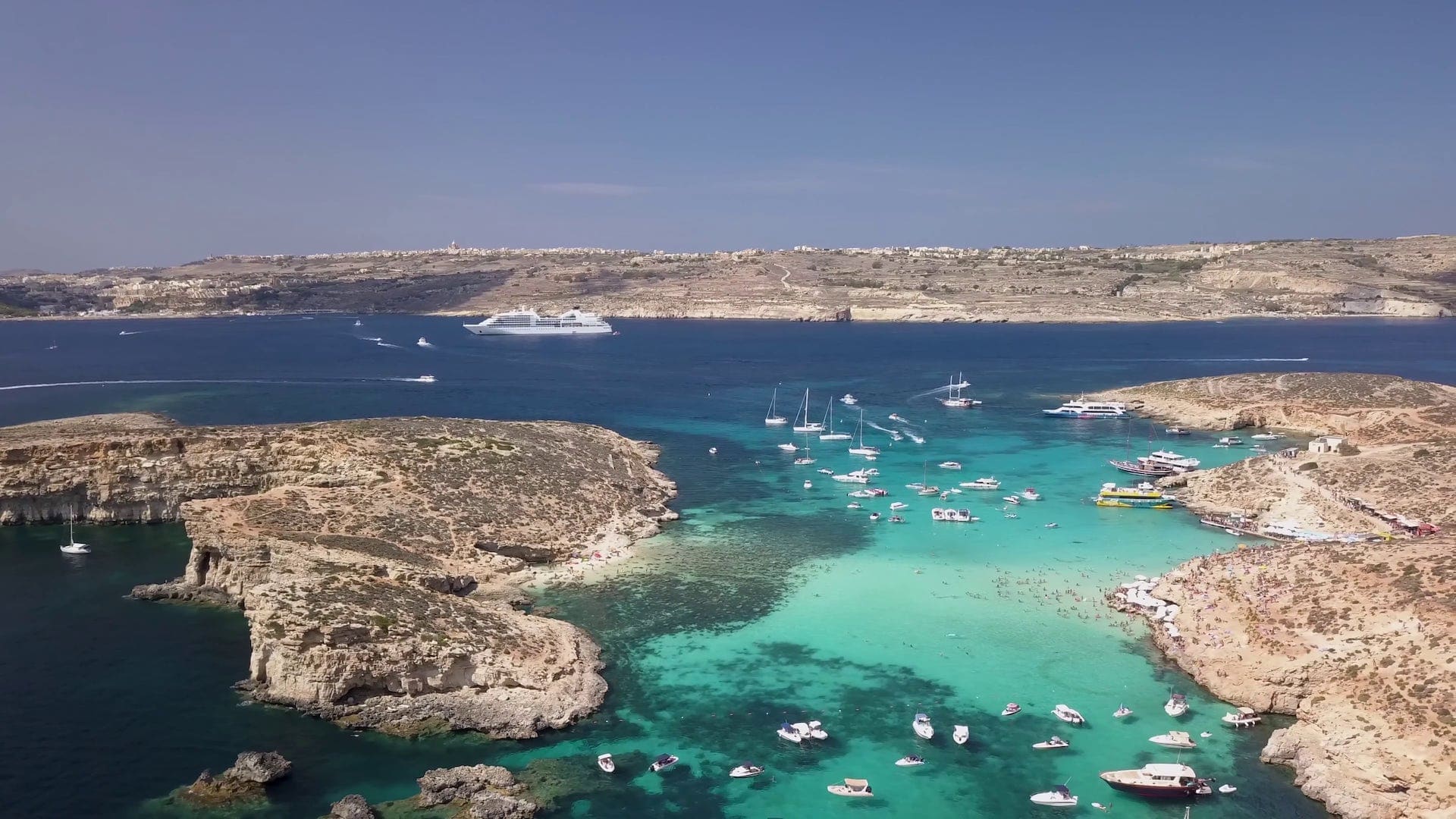
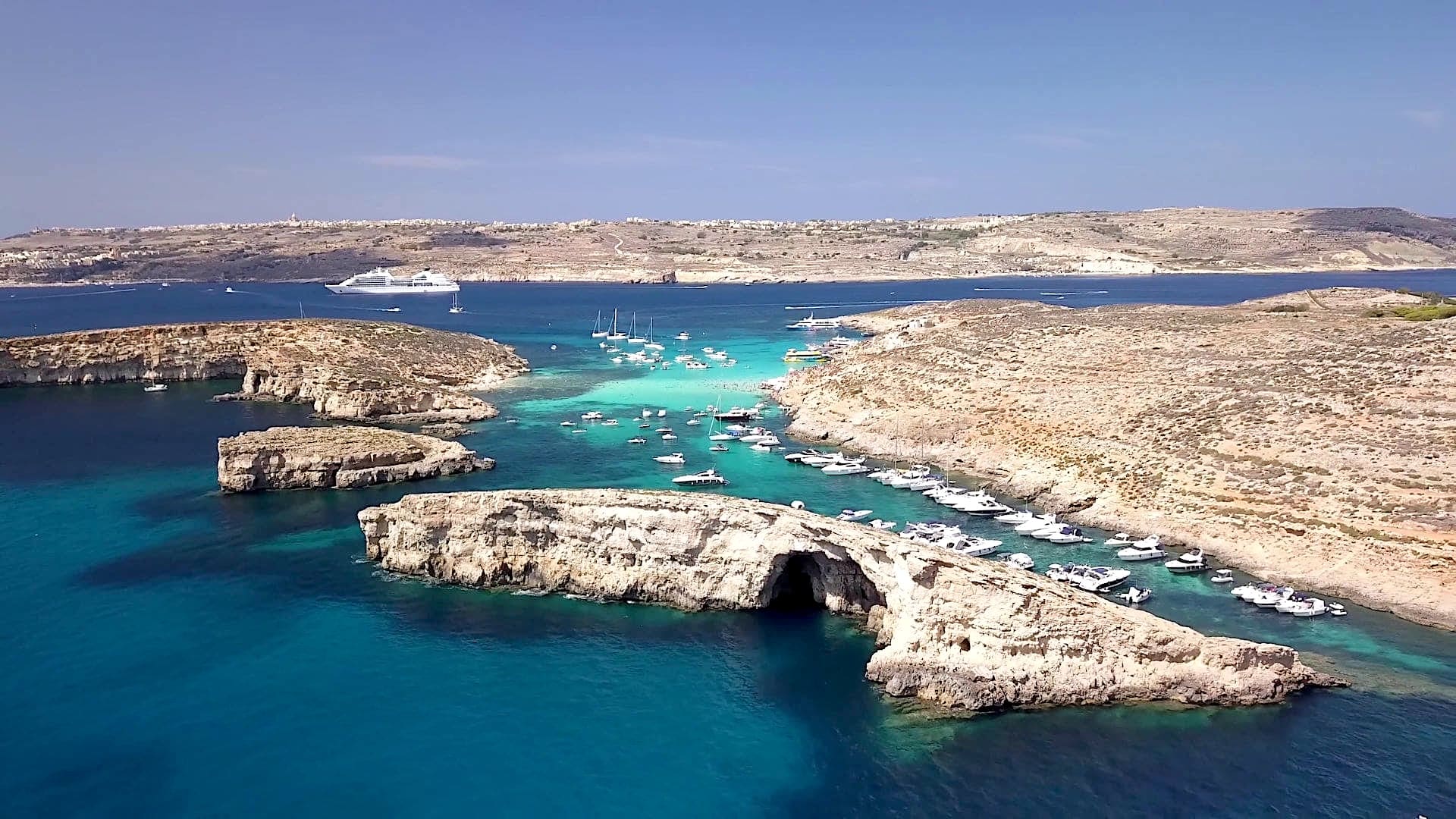
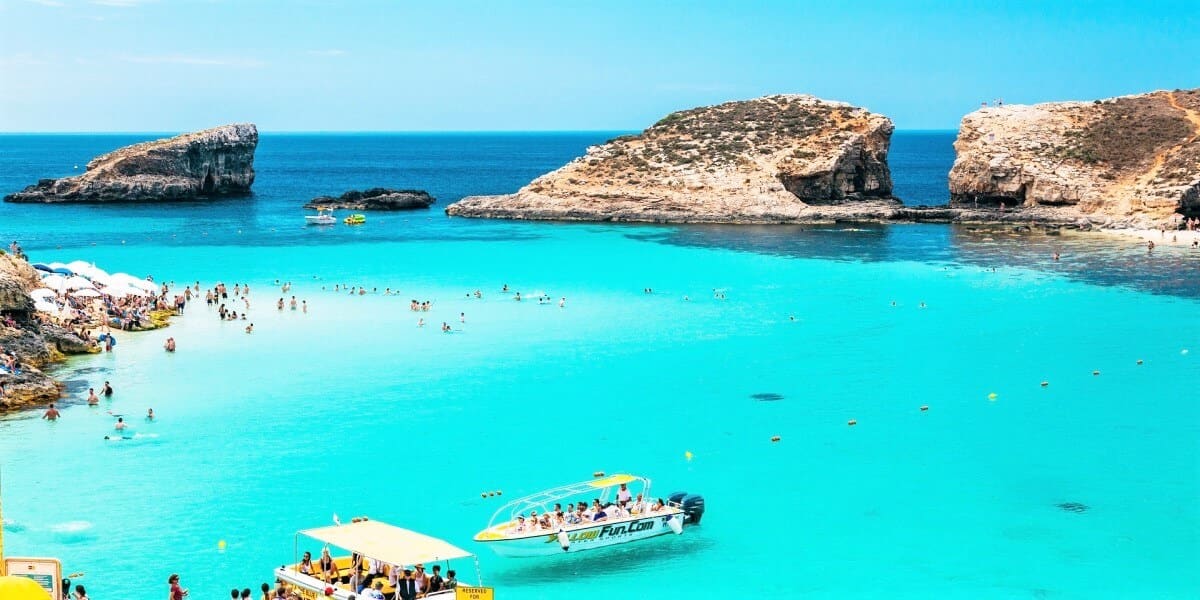
The Blue Lagoon is not a conventional beach but a shallow sea channel, the Fliegu strait, which separates the island of Comino from the uninhabited islet of Cominotto. The pale sandy bottom and the shallow depth filter the light and give the water that lagoon-blue colour that is so often photographed.
Comino (Kemmuna in Maltese) is a tiny island, barely 3.5 km², long almost deserted: a handful of year-round residents, a 17th-century watchtower (Santa Marija Tower), a chapel and a former isolation hospital now left to ruin. The island and its lagoon are listed as a Natura 2000 protected area, which explains the recent controls on visits. The setting has also served as a location for several film shoots.
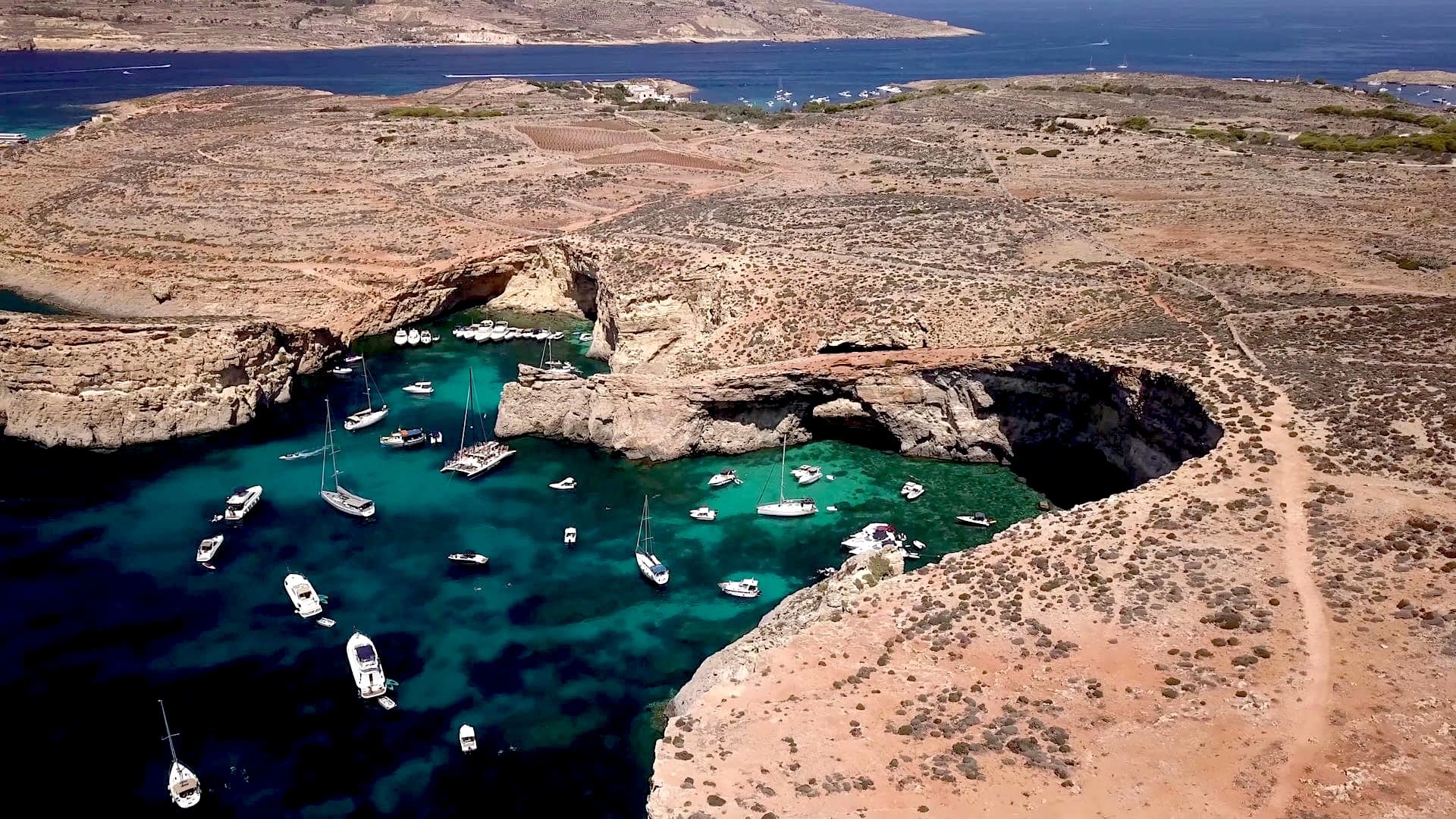
Two stretches of water share the spotlight: the Blue Lagoon itself, between Comino and Cominotto, and the Crystal Lagoon, a wilder, deeper cove a little off to the side, prized for snorkelling and diving.
What to see and do at the Blue Lagoon
Swimming, snorkelling, a boat trip and hiking on Comino: there are several ways to experience the Blue Lagoon, and the best is often the one that gets a little away from the crush.
Swimming in the lagoon
The heart of the site: a shallow pool of turquoise water, calm and warm, where you can stand for a long stretch. The little sandy beach is tiny and quickly overwhelmed; to get into the water without jostling for space, aim for the very first boat of the morning or move beyond the first cove.
Snorkelling at the Crystal Lagoon
Set apart from the Blue Lagoon, the Crystal Lagoon is a wilder inlet fringed with rocks, deeper and far quieter. Mask and snorkel reveal clear, fish-rich waters, away from the comings and goings of the boats. Bring water shoes for getting in over the rocks.
The crossing and the cruises
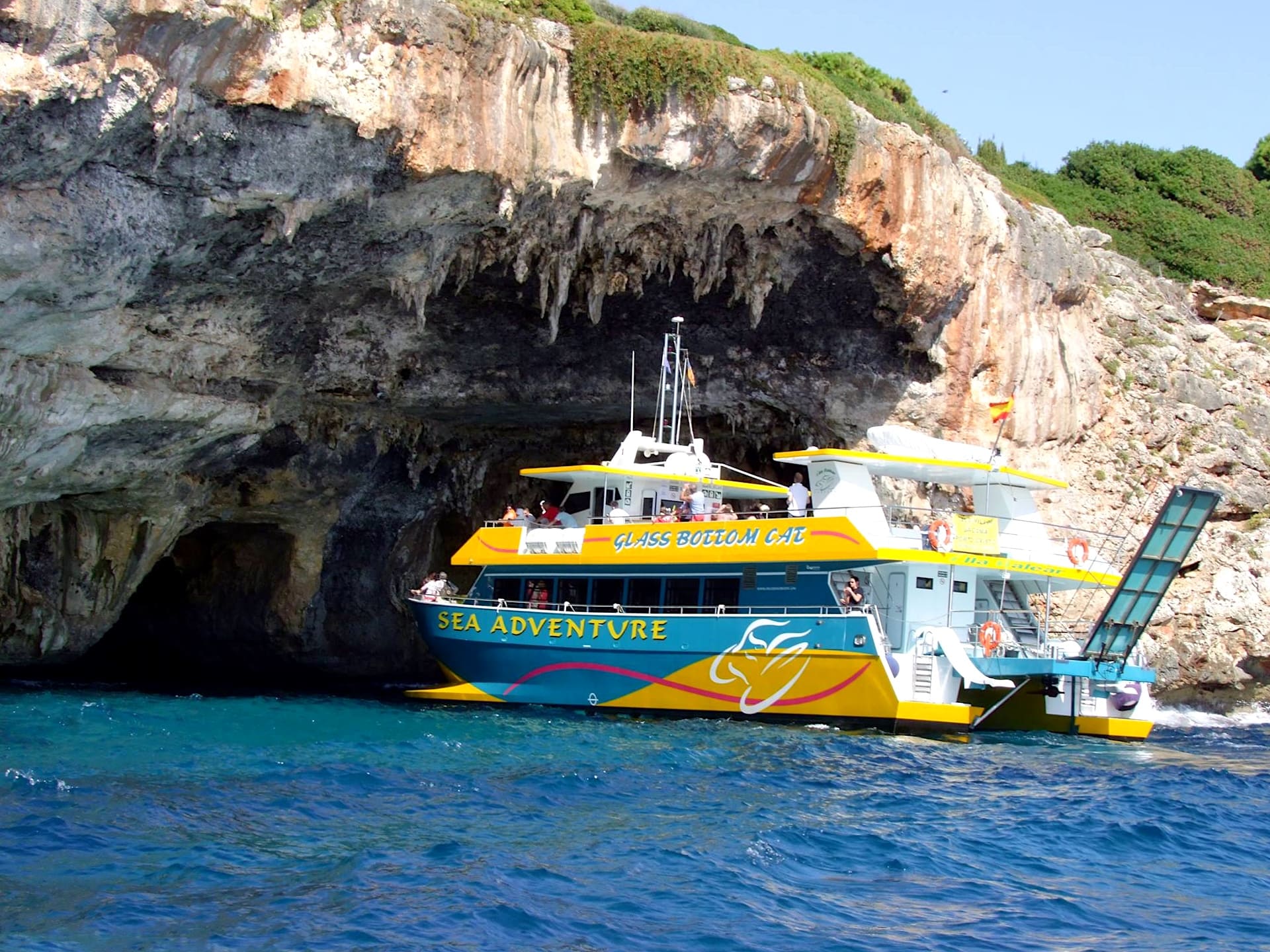
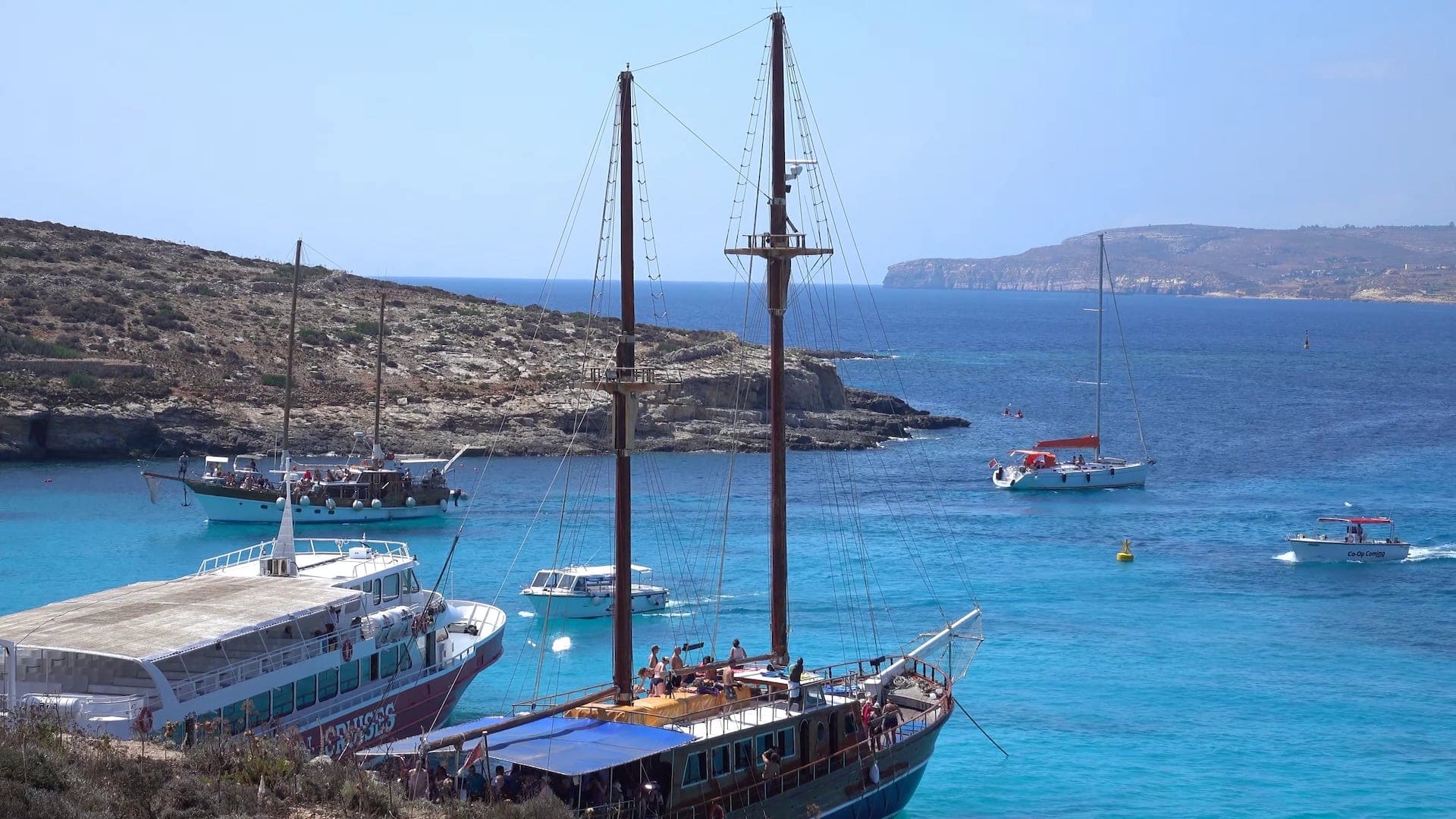
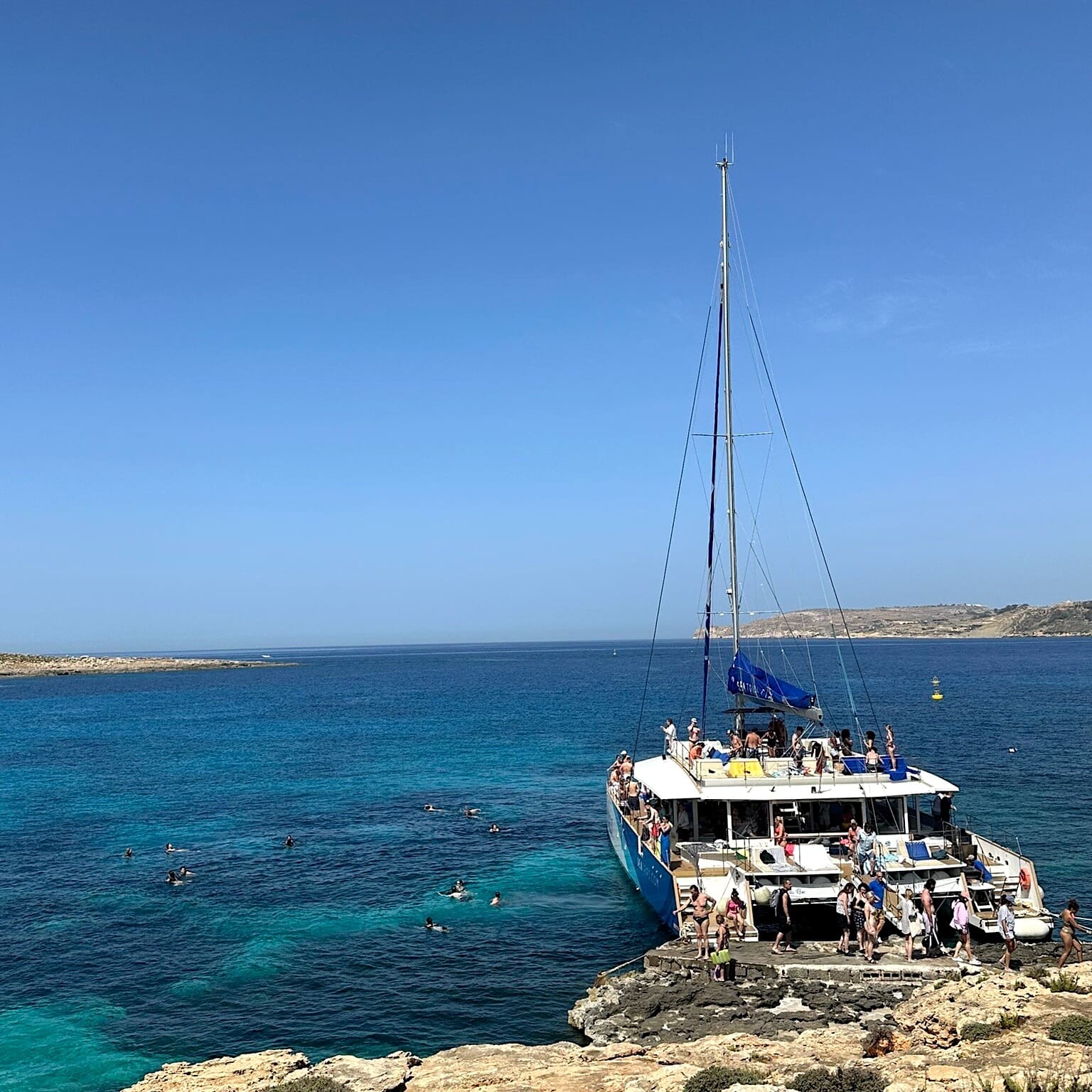
Many find the boat trip as beautiful as the arrival itself. Full-day or half-day cruises often pair the lagoon with Comino’s sea caves and a stop at Cominotto. To swim in peace, a small water taxi drops you closer to the lagoon than a large excursion boat does.
Hiking on Comino
As soon as you leave the lagoon, the island empties out. An easy path leads in about twenty minutes to Santa Marija Bay (sand, shallow water, toilets), to Santa Marija Tower and to the old isolation hospital. Best done outside the hottest hours, in closed shoes: there is little shade.
Practical information
Prices
Access to the lagoon
free (online booking required)
Shuttle ferry (return, adult)
approx. €15
Shuttle ferry (return, child)
approx. €7
Organised cruise
from €15 to €30
Parasol + 2 sunbeds
€30 to €35
Opening times
Access
all year round, during the day
First boats
around 8.30am
Best time
early morning or off-season
Booking
QR pass required
Where to eat at the Blue Lagoon?
There are plenty of fast-food outlets on Comino, all located at the Blue Lagoon landing point. Basic stalls, food-truck style, serve food and drinks, including the iconic pineapple cocktails. That said, don’t expect fine dining or sit-down restaurants where you can settle in at a table.
There is no supermarket or anything of the sort on Comino, so if you set off to explore the island, always remember to bring something to keep yourself hydrated. There is no catering at all in the heart of the island. The island’s sparse vegetation offers very little shade, and the heat soon makes itself felt whatever the season.
Can you stay overnight at the Blue Lagoon?
How could you not dream of sleeping in the middle of the Blue Lagoon’s paradise setting? Unfortunately, that is likely to be tricky. At present there is no accommodation on the island of Comino apart from the small campsite at Tal Ful. Be warned, though: the area authorised for semi-wild camping is very limited (pitches are scarce), it has no facilities beyond toilets, and it is essential to follow the rules of the Environment and Resources Authority (ERA).
Travellers looking for a hotel on Comino will have to wait, and probably for a long time. The ‘Comino Hotel’, once the island’s only hotel, has been closed since 2022. The resort-and-spa project, since renamed Six Senses Comino and led by HV Hospitality (a subsidiary of Hili Ventures), was authorised by the Environment and Resources Authority (ERA) in 2022, then approved by the Planning Authority in April 2025. But the development remains blocked: in May 2026, following an appeal brought by several environmental NGOs, a court saw its ruling upholding the permit overturned, with the case sent back for review. The project is therefore once again on hold pending a regulatory procedure, with no firm timetable. Once all the permits are definitively confirmed, the construction work is expected to take around two and a half years. In other words, this hotel, if it ever comes to be, will not open its doors before the end of the decade.
The hotels at Ċirkewwa are therefore currently the closest to the Blue Lagoon, though they remain on the main island of Malta. Even so, some of them, such as the Riviera Spa Resort or the Ramla Bay Resort, run their own partner shuttle service that picks holidaymakers up right outside the hotel and drops them at the Blue Lagoon.
Where is Malta’s Blue Lagoon
The Blue Lagoon sits in the channel that separates the island of Comino from the islet of Cominotto, in the middle of the Fliegu strait, between Malta and Gozo. It lies about twenty minutes by boat from the north of Malta (Ċirkewwa) and around ten minutes from the island of Gozo.
How to get to Malta’s Blue Lagoon
By shuttle boat from Ċirkewwa
The most economical way to reach Malta’s Blue Lagoon is to travel by bus or car to the Ċirkewwa ferry stop, in the north-west of the island, then take a shuttle boat towards the lagoon.
Boats leave every 45 minutes for the island of Comino and drop passengers right in the middle of the Blue Lagoon. The crossing takes about 20 minutes and the return ticket costs 15 euros for adults and 7 euros for children. Tickets for the Blue Lagoon can be bought online on the Comino ferry website or directly at the Ċirkewwa kiosk. The kiosk for the Blue Lagoon is located outside the Cirkewwa Passenger Terminal.
By cruise from Ċirkewwa, St Paul’s Bay or Sliema
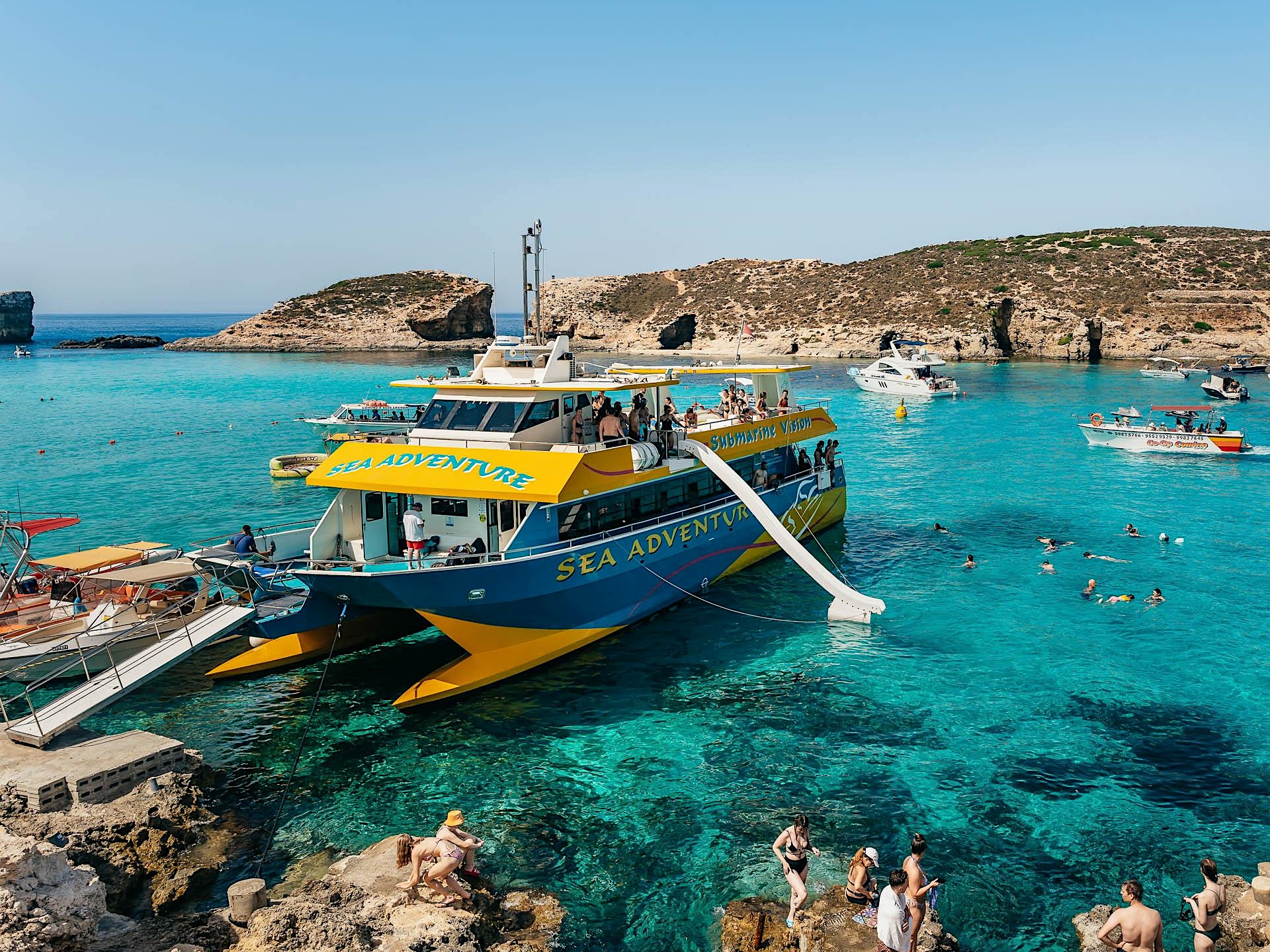
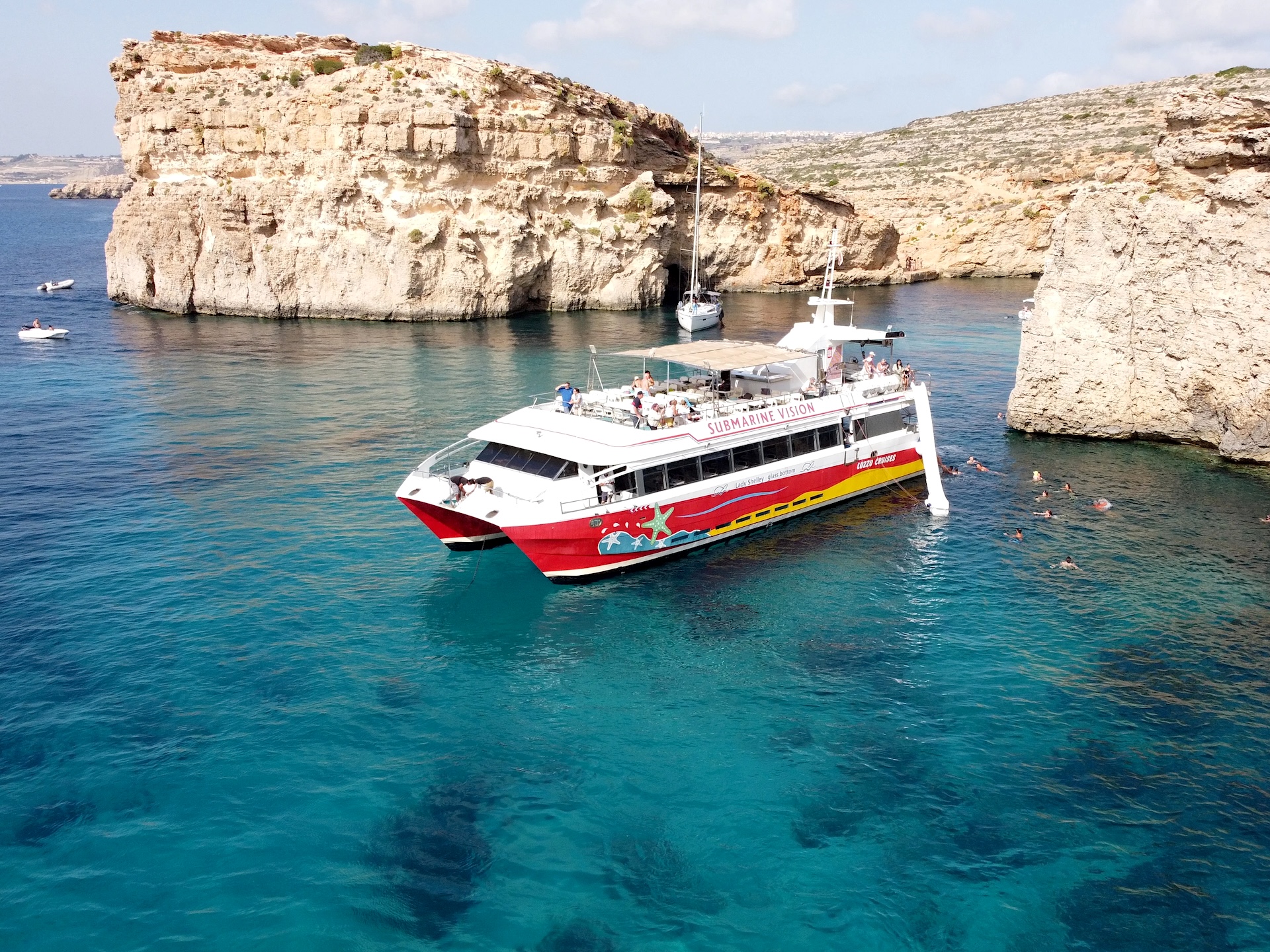
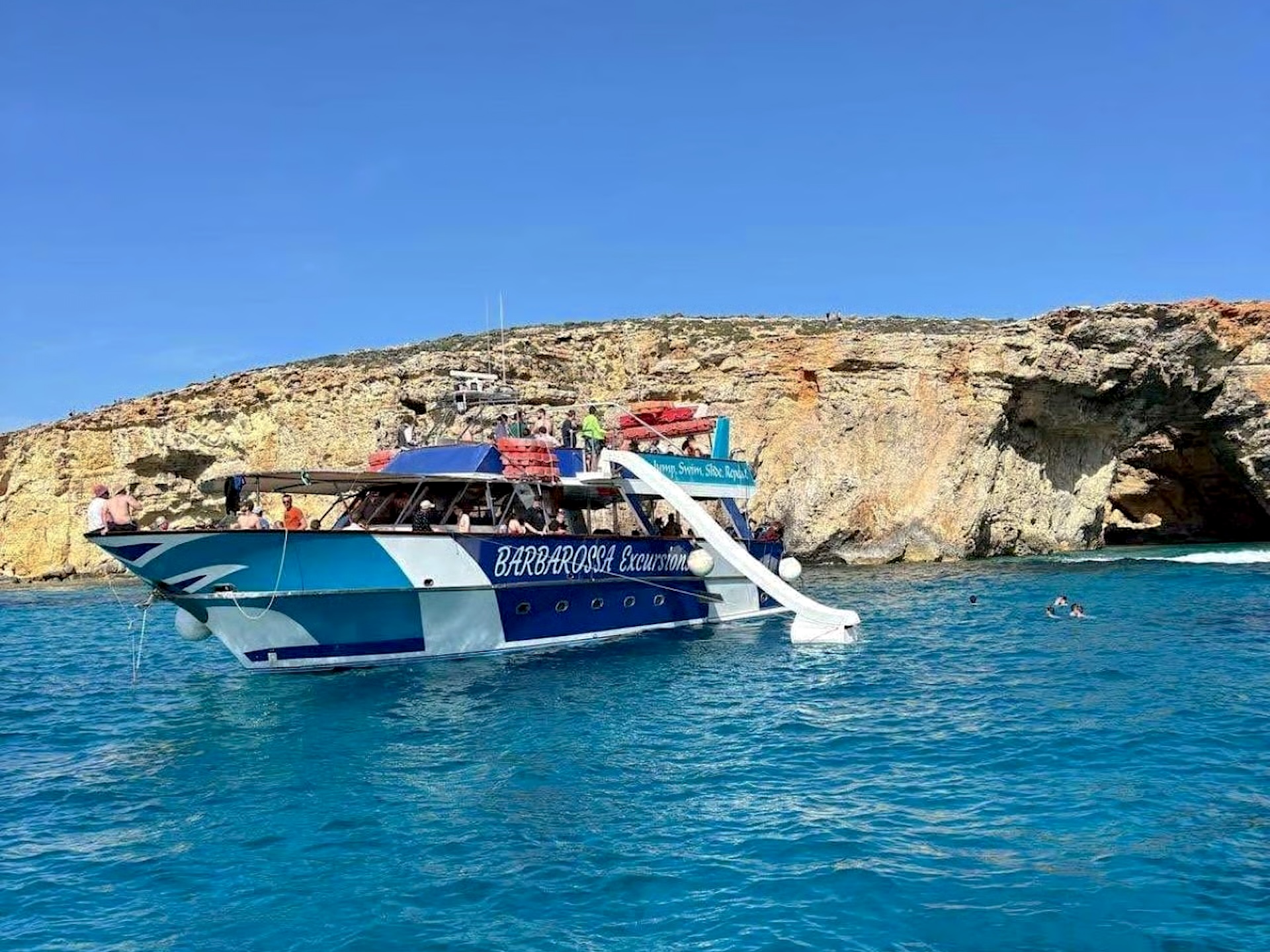
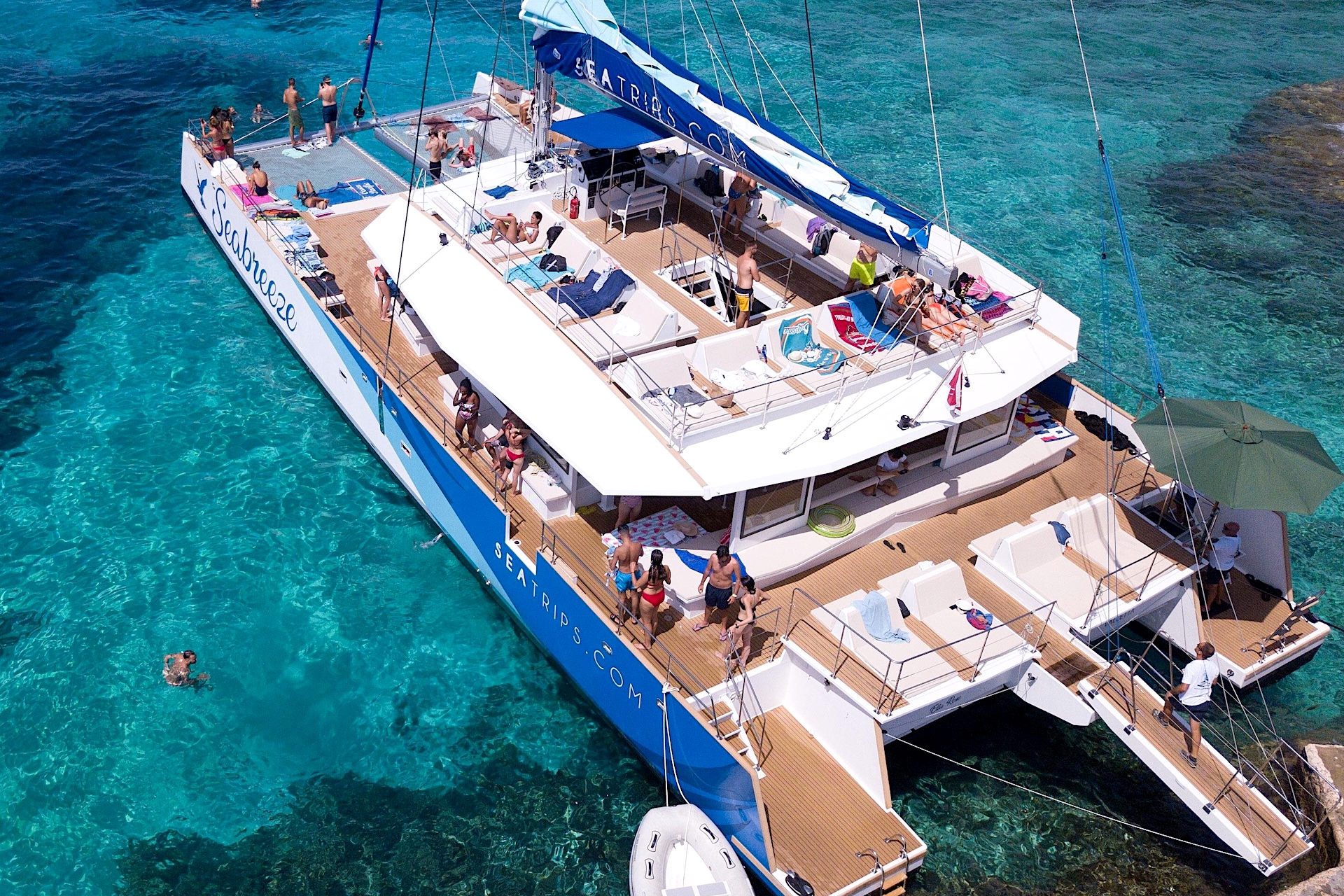
The easiest way to discover the Blue Lagoon is to join one of the many boat cruises. Organised cruises run full day or half day and almost always include a visit to the Blue Lagoon among their stops, along with other iconic sights. Cruises are both fun and comfortable, and they also have the advantage of showing you more out-of-the-way spots that can only be reached by boat, such as the many sea caves or the impressive cliffs around Comino.
The cruise boats mostly depart from the port of Buġibba (St Paul’s Bay) and from Sliema Ferry. It is advisable to book your tickets in advance to be safe, particularly during high season, as demand is strong for this kind of activity. That said, you can still find ticket stalls for the main companies along the seafront quays at San Ġiljan (Spinola)/Sliema Ferry and Buġibba.
The most popular companies are Captain Morgan Cruises with its fleet of red boats, Sea Adventure and Sea Breeze.
By private boat, with or without a skipper
For a unique experience, away from the group cruises, you can hire a private boat to the Blue Lagoon, with or without a captain (skipper). Probably the best way to discover the blue lagoon for a tailor-made experience. Boat hire is also a great option for small groups, as the cost is quickly offset by the number of people on board.
What time should you arrive at the Blue Lagoon to beat the crowds?
As early as you can. The consensus is clear: aim for the first boat, around 8–8.30am, and in any case be there before 10am. After that, shuttles and cruises arrive one after another and the small beach fills up. Late in the afternoon the crowds thin a little, but the return trip is a scrum.
How do you get to the Blue Lagoon?
By sea only. The shuttle from the Ċirkewwa terminal (northern Malta) is the cheapest option: around €15 return, a crossing of about twenty minutes, with departures every 30 to 45 minutes from 8.30am. You can also reach the lagoon on an organised cruise from Sliema or Buġibba, or by private boat.
Do you need to book, and is there a visitor cap?
Yes. Since May 2025, a free QR-code pass, obtained online from Comino’s official website, is required to land on the lagoon shore. The number of places is capped per slot (4,000 visitors on site at any one time). Book early in high season.
How much do sunbeds and parasols cost?
Expect around €30 to €35 for a set of one parasol and two sunbeds, and more for the best spots. They go fast: by midday there are often none left and you fall back on the rocks. If you want one, hire it as soon as you arrive.
Is there shade, toilets and are there jellyfish?
Natural shade is almost non-existent beyond the paid parasols, so bring a hat, sunscreen and something to shelter under. Free toilets do exist (by the campsite and at Santa Marija), but they are often crowded and unevenly maintained. Jellyfish are reported at times, though they rarely stop you swimming.
Can you sleep at the Blue Lagoon or on Comino?
Barely. The island has no working hotel: the only one, the Comino Hotel, has been closed since 2022, and the Six Senses resort project remains stalled in legal proceedings. That leaves the small, semi-wild campsite at Tal Ful, with very limited pitches and no facilities beyond toilets. The nearest hotels are in Ċirkewwa, on mainland Malta.
What should you bring to the Blue Lagoon?
Water (it’s pricey on site), sunscreen, a towel and something for shade. Closed or water shoes are handy for the rocks and dusty paths. Skip the pushchair: getting into the water often means steps and rocks.
What’s the difference between the Blue Lagoon and the Blue Grotto?
The Blue Lagoon is the swimming lagoon on the island of Comino, between Comino and Cominotto, reached by boat. The Blue Grotto is a set of sea caves in the south of Malta, visited by small boat from Wied iż-Żurrieq. Two separate sites, despite the similar names.