St Julian’s, Malta’s lively seaside and nightlife hub
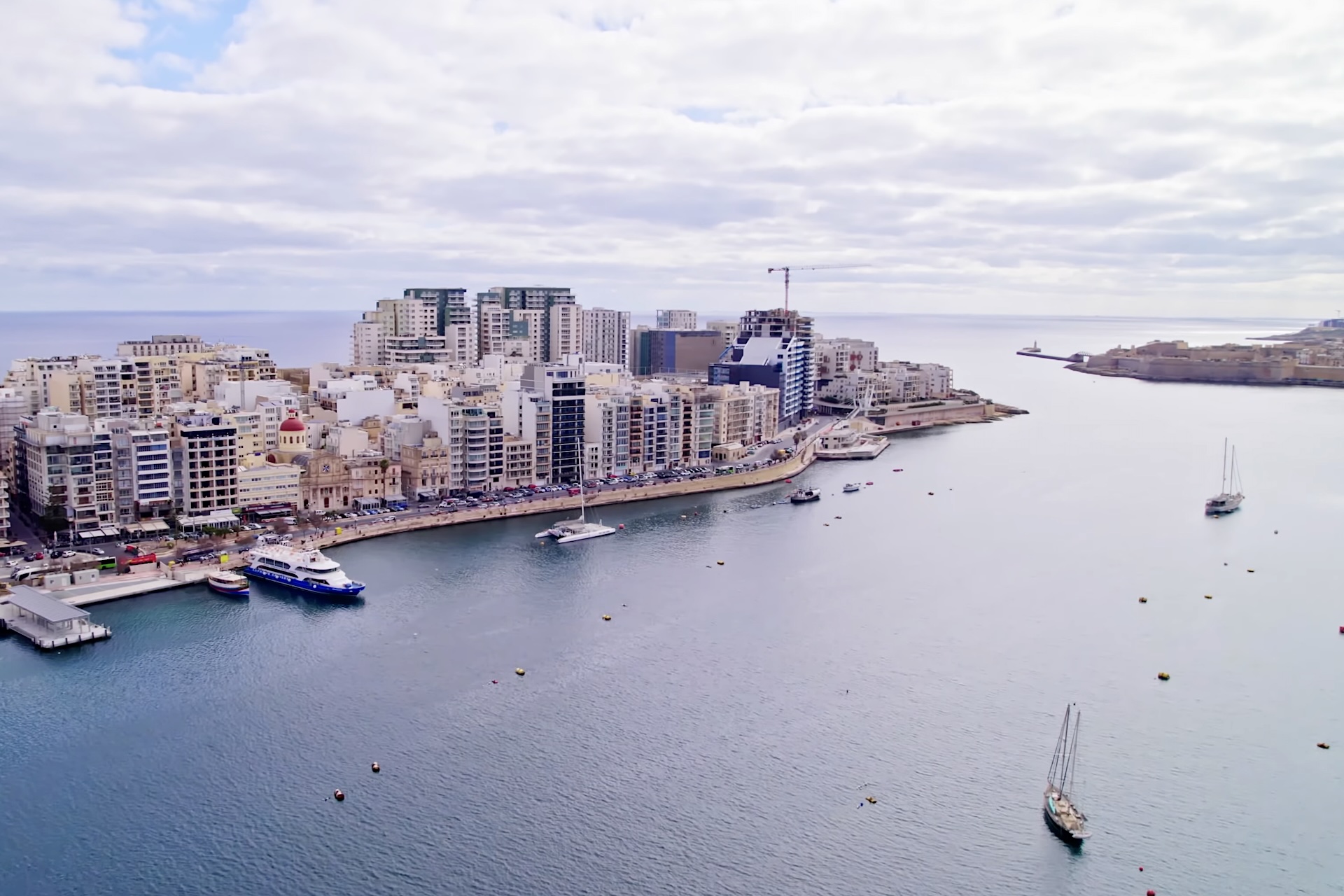
St Julian’s (San Ġiljan) is Malta’s leading seaside resort. In just a few decades, this former fishing village has become the buzzing heart of the archipelago, almost entirely geared towards tourism and entertainment. Here you’ll find a string of turquoise bays (Balluta, Spinola, St George’s Bay), the upscale Portomaso marina with its towers, and Paceville, the epicentre of Maltese nightlife. A town in constant flux, bristling with cranes, that has traded its old-world calm for the energy of a seafront that never sleeps.
- 15,208 inhabitants (2024)
- 121 m Mercury Tower, Malta’s tallest building
- capital of Maltese nightlife
Must-sees in St Julian’s
From the postcard charm of Spinola Bay to the roar of Paceville, five places sum up St Julian’s, most of them just a few minutes’ walk apart along the seafront.
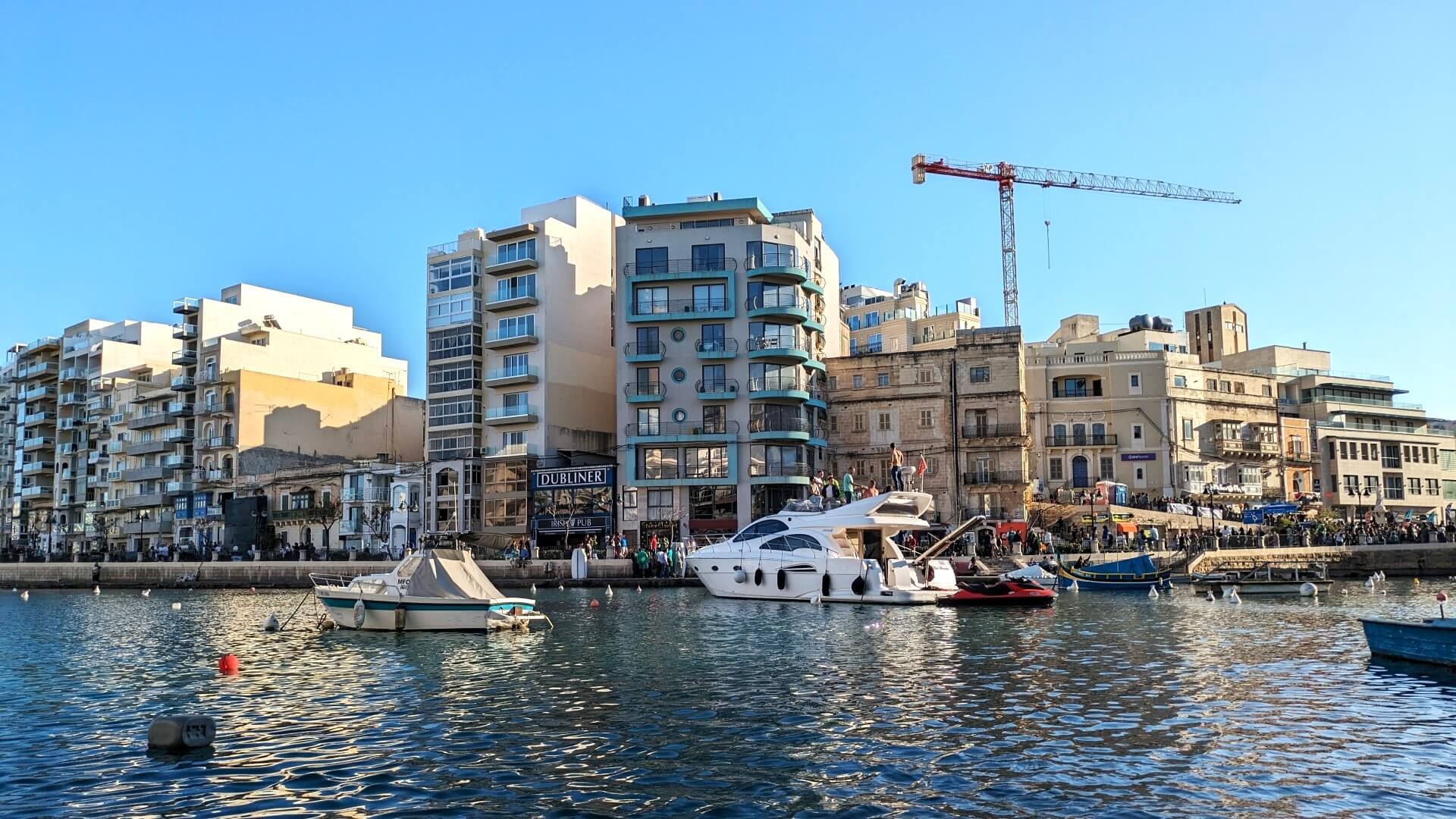
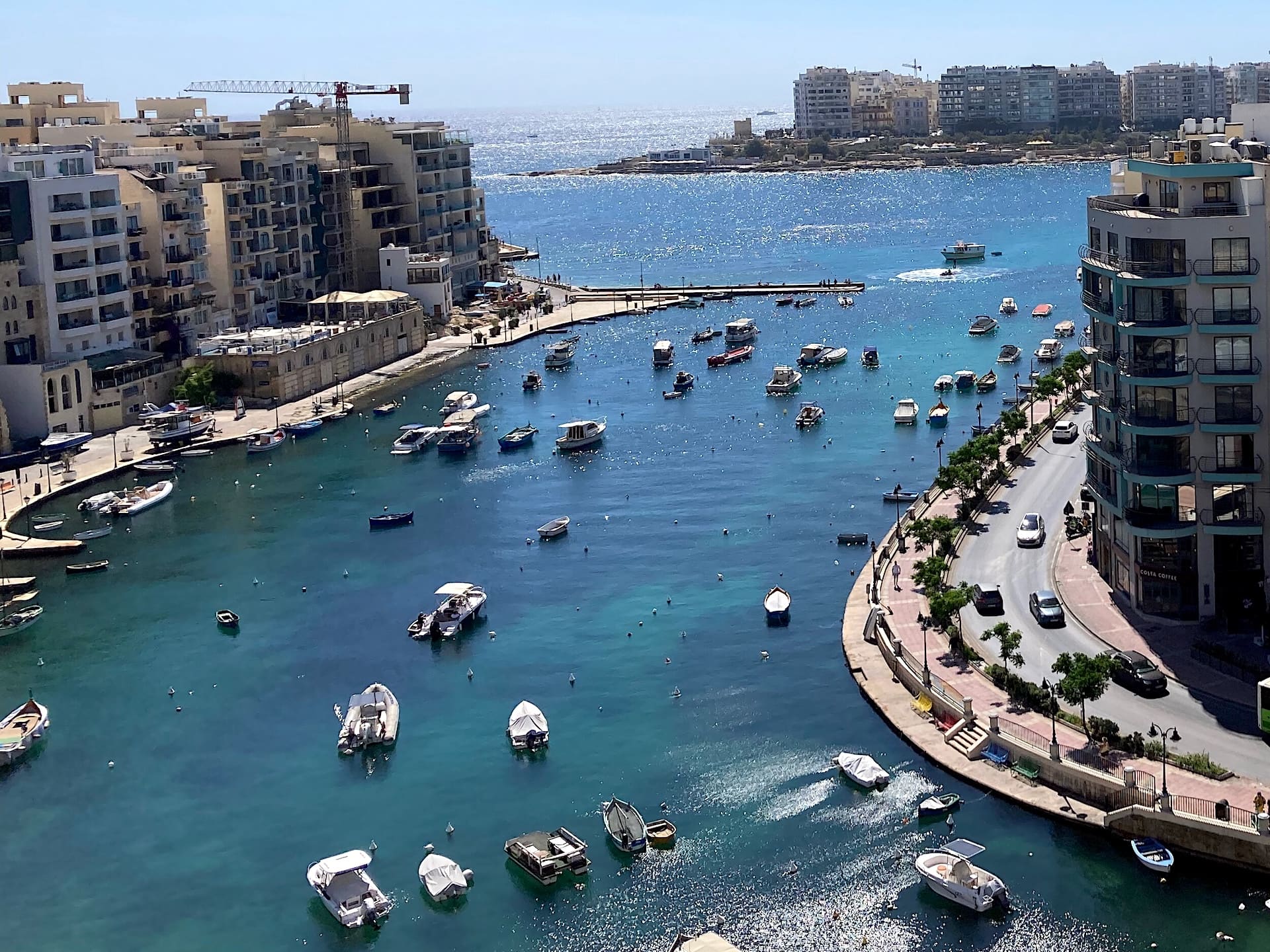
Spinola Bay
The old fishing harbour turned town postcard: a few colourful luzzu still moored, the church of Our Lady of Mount Carmel looking down from above, and a row of terraces almost at the water’s edge.
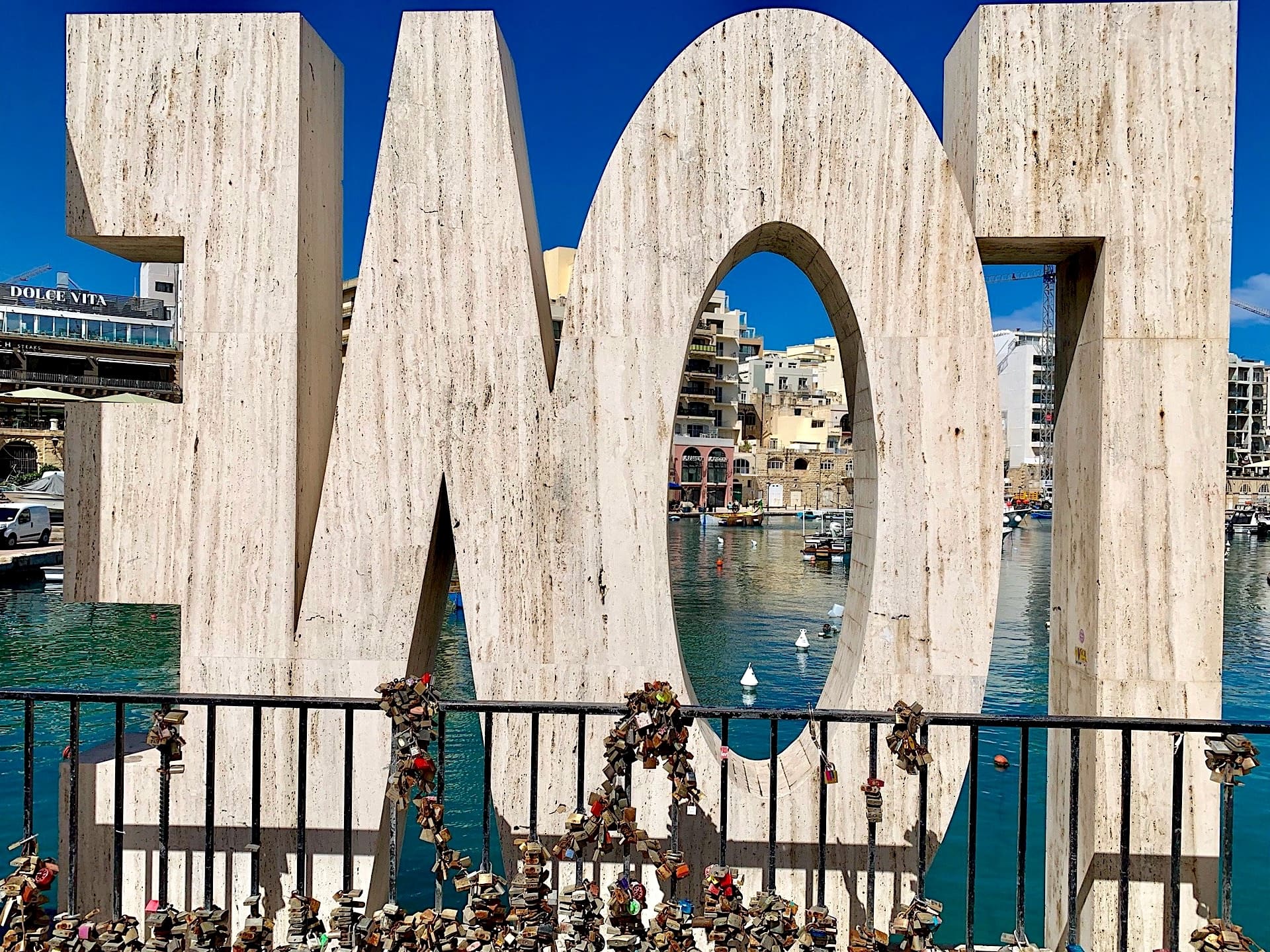
The Love Monument
Architect Richard England’s « LOVE » sculpture, set on the edge of Spinola Bay: the town’s most popular photo spot, especially at sunset.
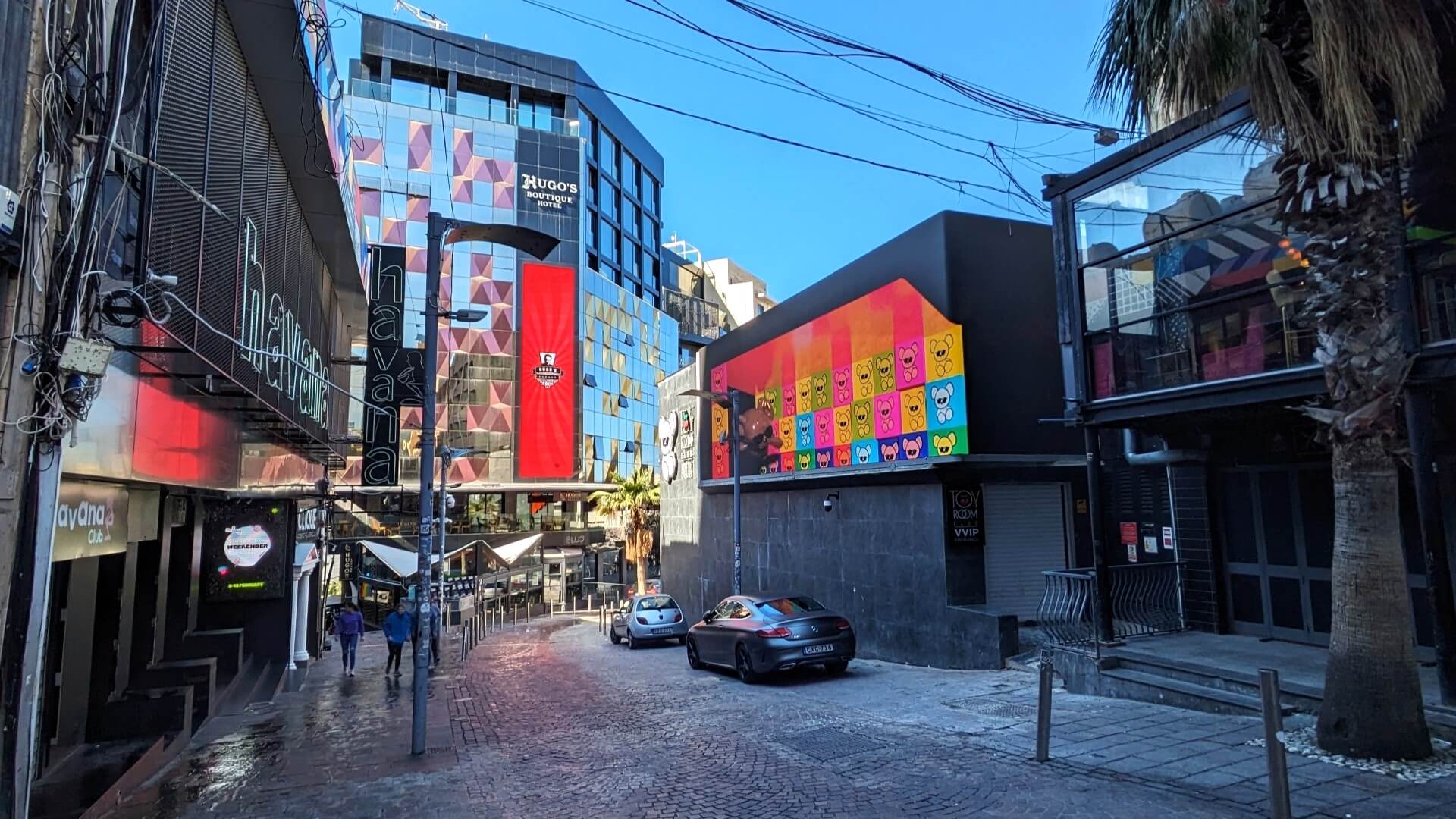
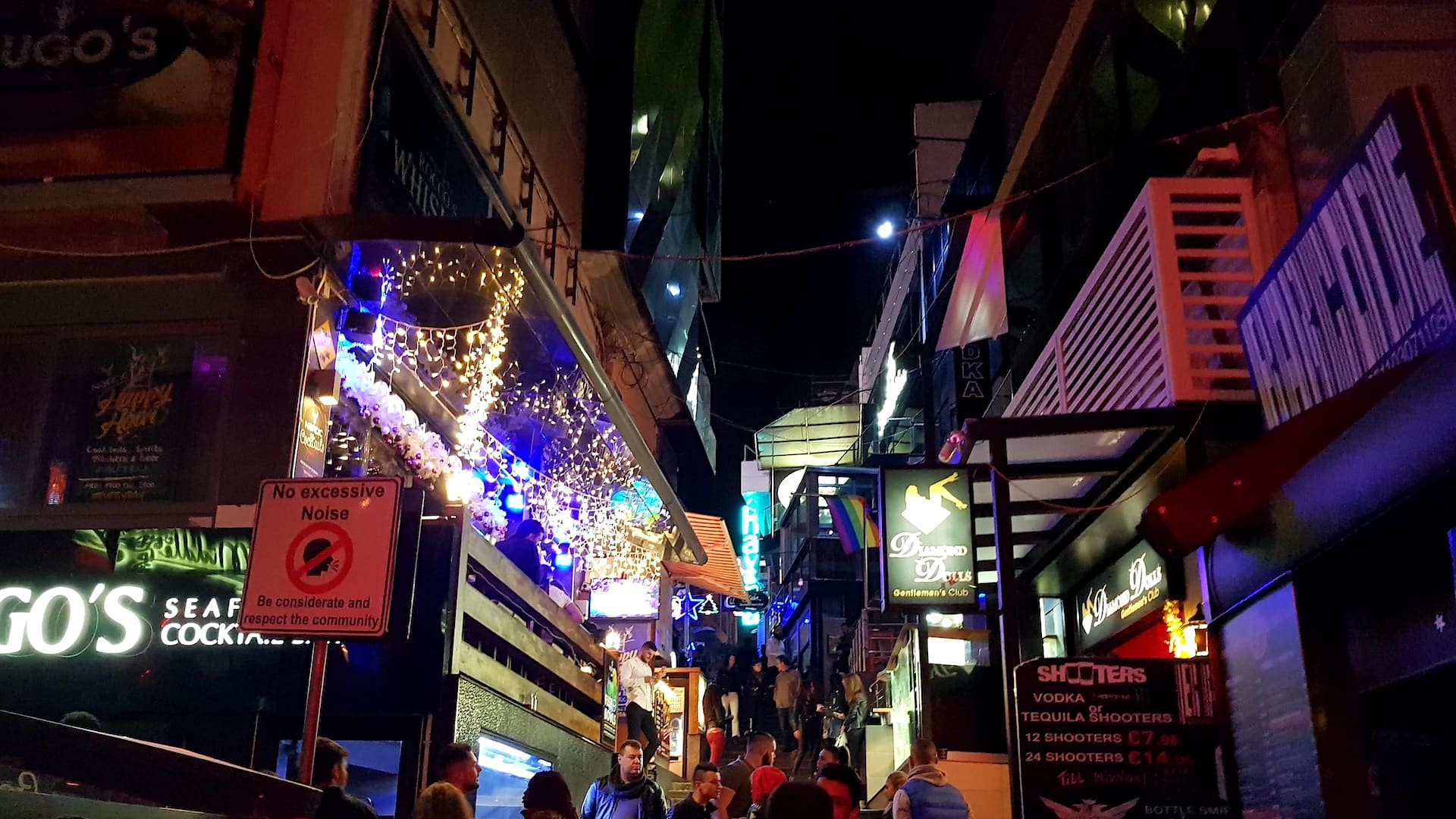
Paceville
Malta’s party hub, packed into a handful of streets: dozens of bars and clubs, plus a cinema, a bowling alley and the Bay Street shopping centre. The buzz runs seven nights a week.
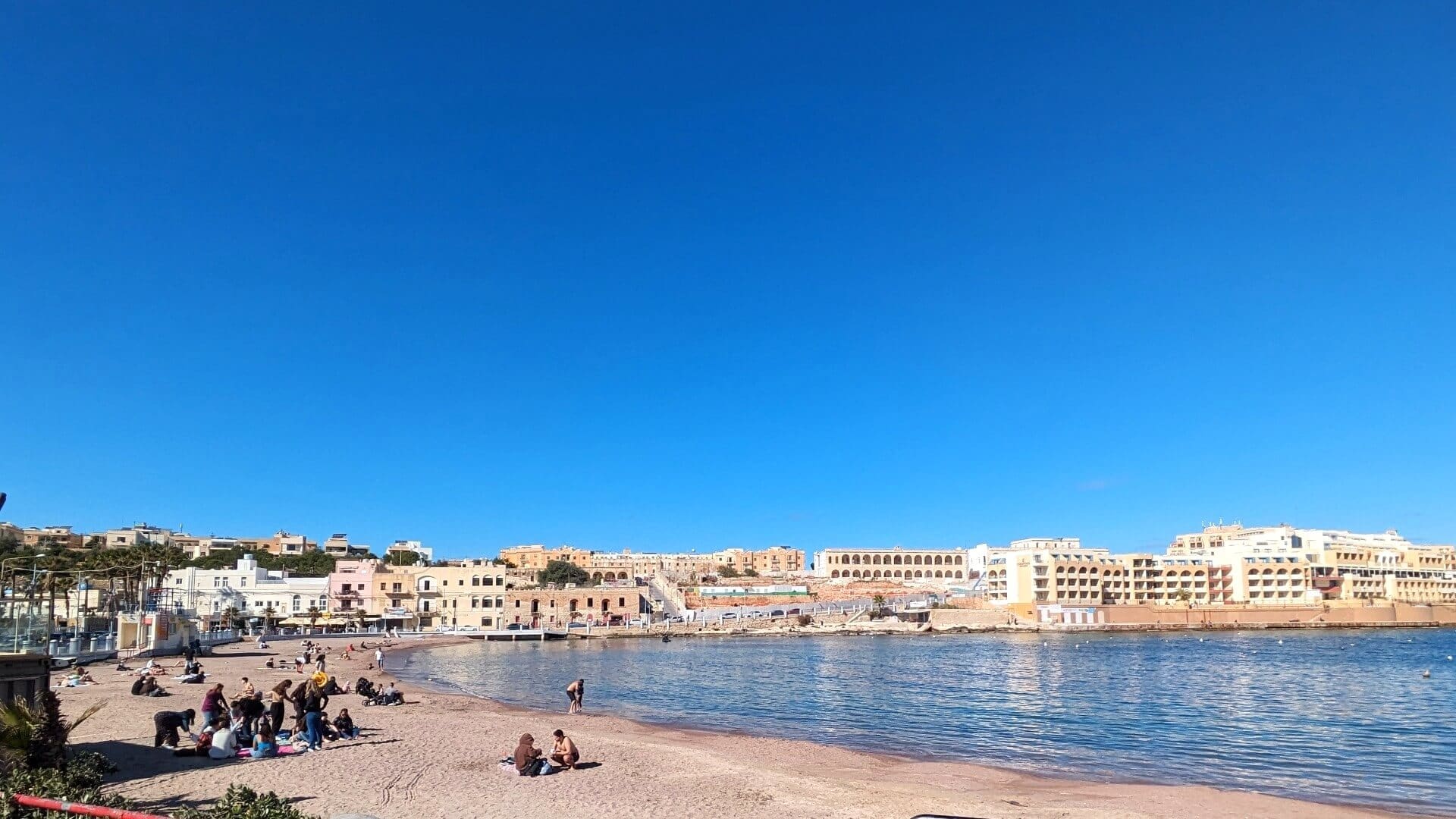
St George’s Bay
The town’s small sandy beach, just below Paceville. Its sheltered lagoon and shallow water make it a favourite with families and language-school students.
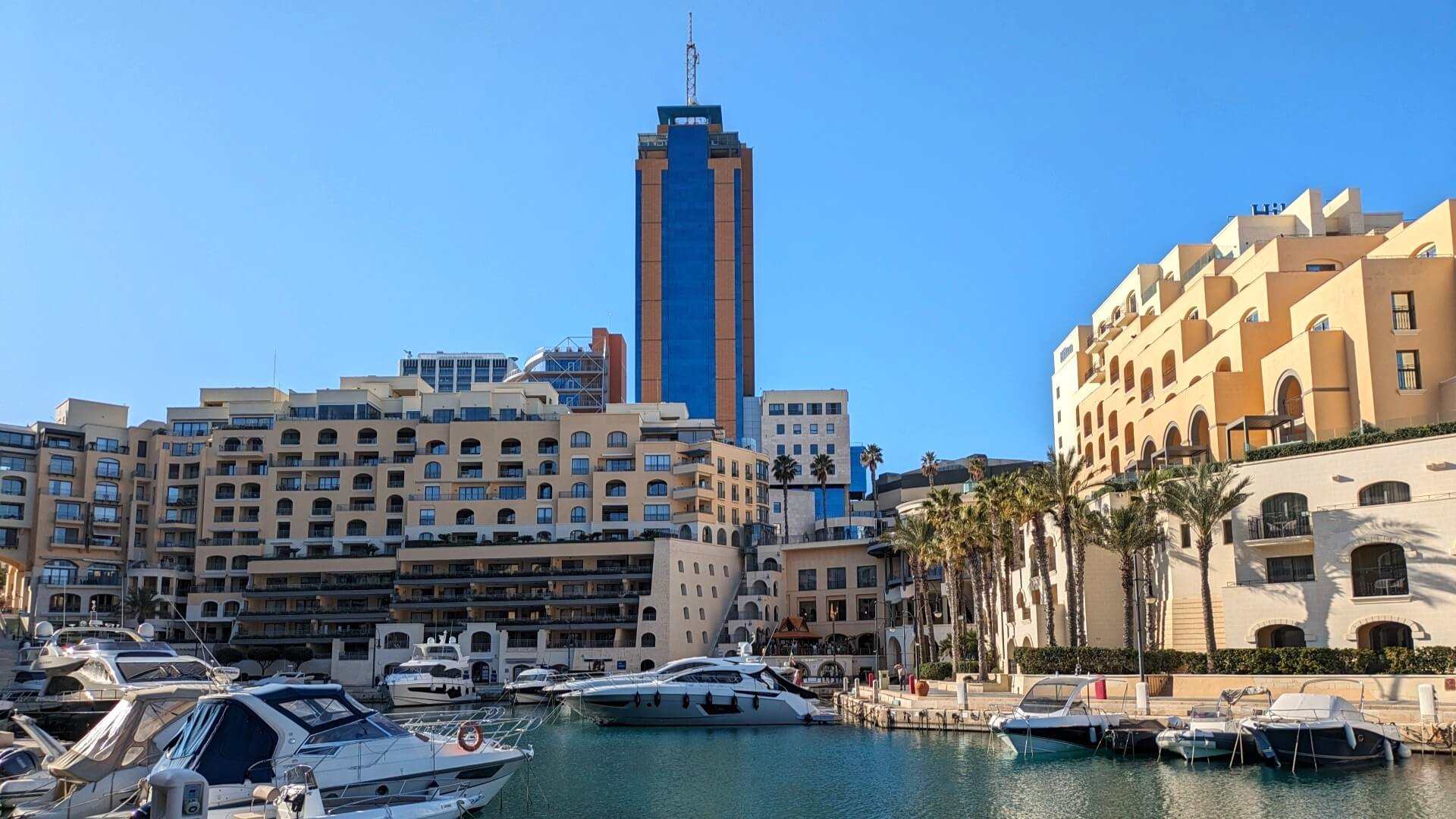
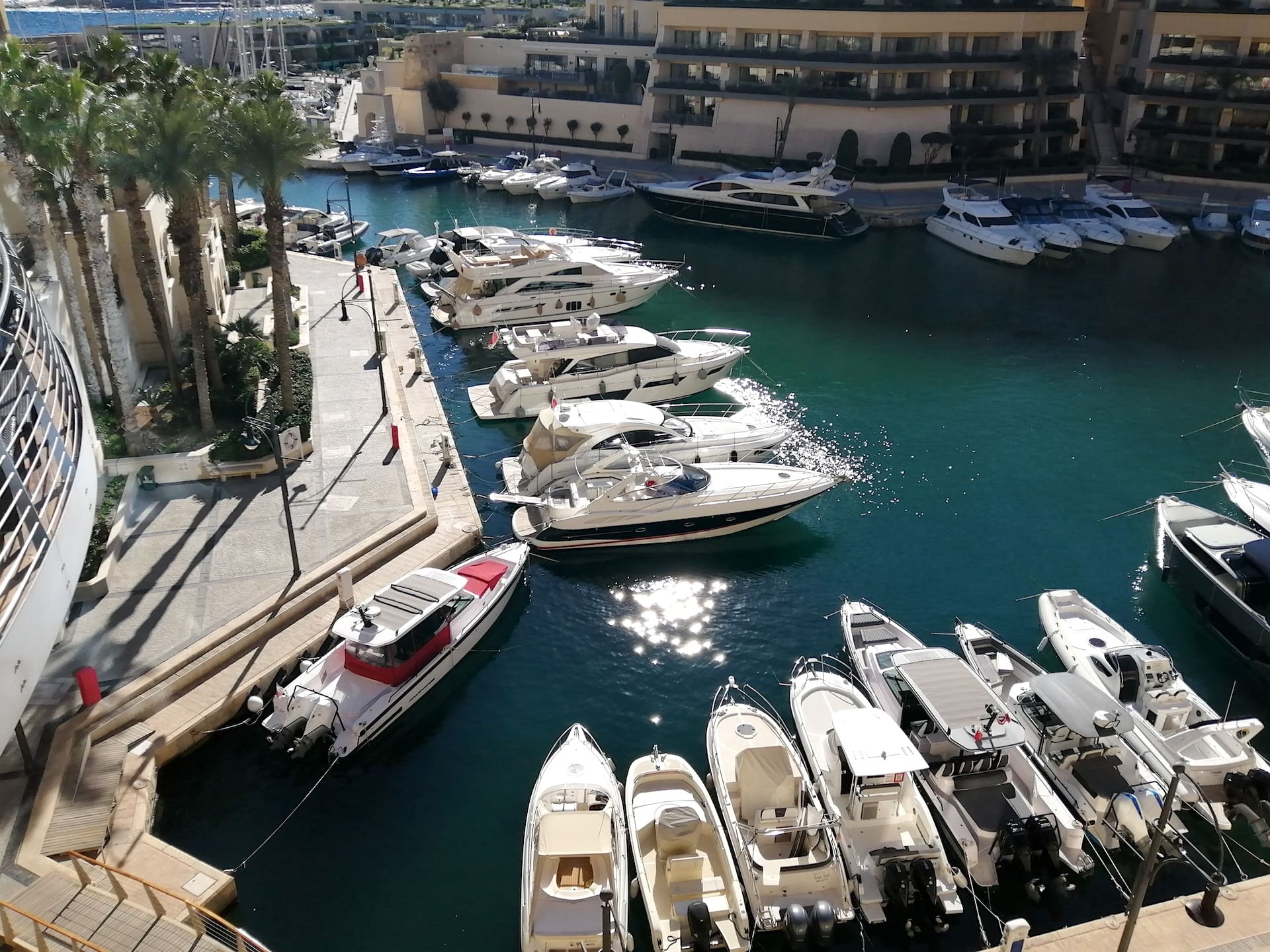
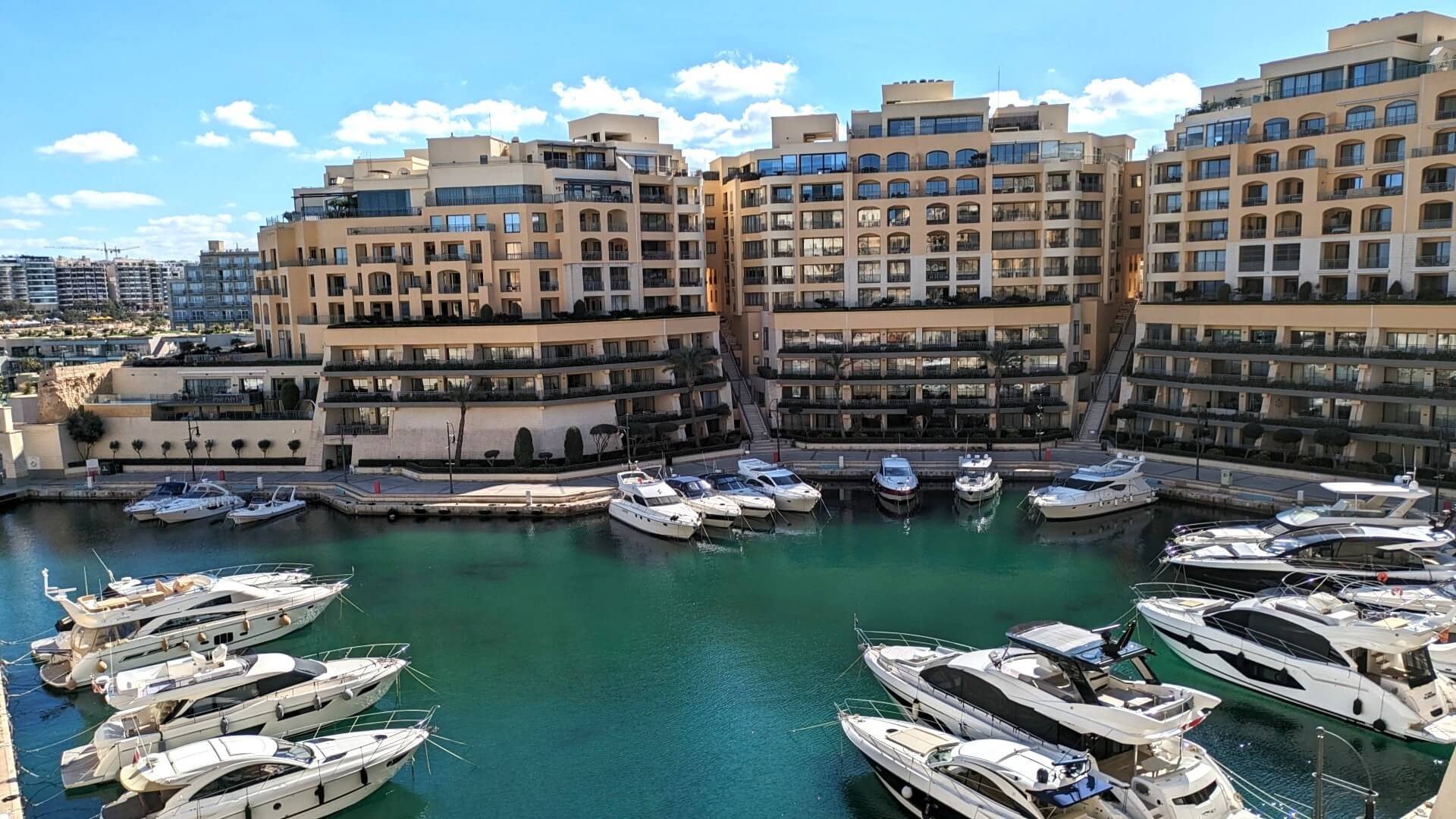
Portomaso
St Julian’s other face: a spectacular marina lined with yachts, some of Malta’s priciest apartments and the Hilton hotel. A calm, refined setting just steps from the bustle of Paceville.
Neighbourhoods and vibe of St Julian’s
Paceville: the heart of Maltese nightlife
Paceville is, without question, the party hub of St Julian’s. The epicentre of Maltese nightlife, this district, barely more than a single street, is packed with dozens of bars, clubs and entertainment venues. The drinks flow freely and hundreds of young revellers, mostly aged 17 to 30, gather here every night to a deafening soundtrack. Beyond its clubs, Paceville also has a cinema, a bowling alley and a shopping centre, the Bay Street Shopping Complex.
St George’s Bay beach
St George’s Bay is a small beach just below the nightlife district, one of the few beaches in Malta. With its charming little lagoon, it is hugely popular with tourists and language-school students.
Spinola Bay
Just steps from the buzz of Paceville begins St Julian’s loveliest bay, stretching from Spinola to Exiles Bay on the edge of Sliema. Spinola Bay, with its famous « Love Monument », is a former fishing harbour where you can still see luzzu, the traditional Maltese boats. The perfect spot to stroll by the water or sit down for a meal facing the sea.
Balluta Bay
Balluta Bay is the next bay along from Spinola. It offers a slightly quieter alternative, with a small man-made sandy beach ideal for sunbathing and a swim. A charming spot too, with its landmark neo-Gothic Balluta church, dedicated to Our Lady of Mount Carmel.
Portomaso
Portomaso is St Julian’s other face: that of luxury and exclusivity. The district is home to a spectacular marina where yachts and luxury boats gather, ringed by some of Malta’s most expensive apartments and the landmark Hilton hotel. The refined restaurants and cafés lining the marina invite an exceptional dining experience. An upmarket, quiet setting just metres from the bustle of Paceville.
The Mercury Tower
The Mercury Tower is Malta’s tallest building, at 121 metres. Designed by architect Zaha Hadid, it stands out for a distinctive twist between the 10th and 13th floors. Opened in 2023, it houses a three-level shopping mall, a lively public square and a mix of residential and hotel space, including the five-star ME by Meliá. It is now the place to shop in Malta.
Things to do in St Julian’s
St Julian’s is the dynamic heart of Malta: the town is never short of things to do.
A must for night-owls, the Paceville nightlife district is unmissable for the under-35s: dozens of bars and clubs open seven nights a week for unforgettable nights out. To discover it differently, organised bar crawls are even on offer.
St Julian’s is also the start of one of Malta’s most pleasant walks, along the seafront from Spinola to Exiles Bay and, for the more energetic, all the way to Sliema. A simple, free outing right by the Mediterranean. For shopping, the Mercury Tower lines up its designer boutiques: a dream address for shoppers in Malta.
Gamblers aren’t left out either: St Julian’s has several casinos, including the famous Dragonara Casino, set out on the peninsula.
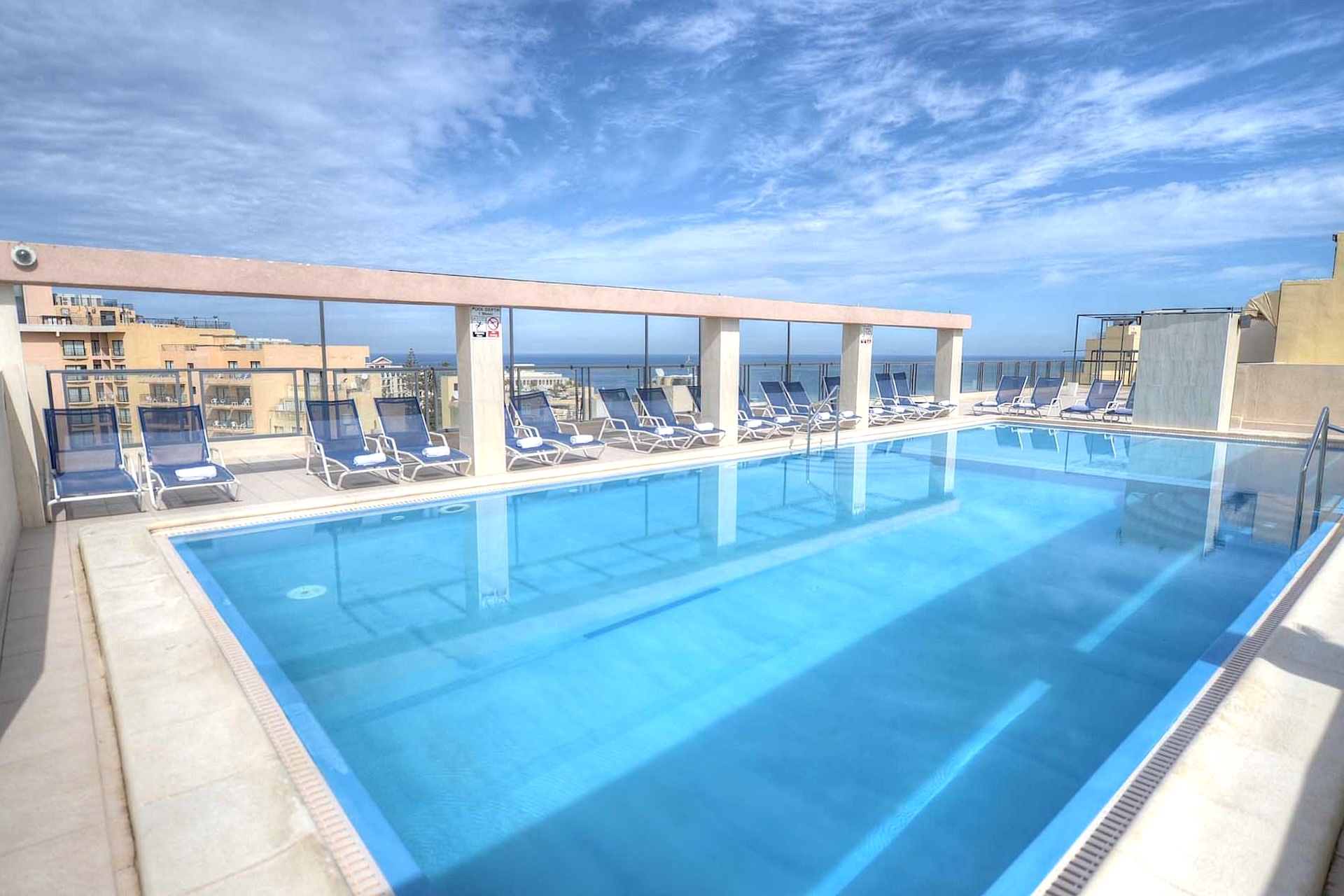
For a view from above, three rooftops offer a breathtaking panorama over St George’s Bay: the Infinity at Hugo’s Hotel, the FLO Skypool and the SKYBEACH at the InterContinental. You can enjoy the pool by day or a drink at sunset, without even being a hotel guest.
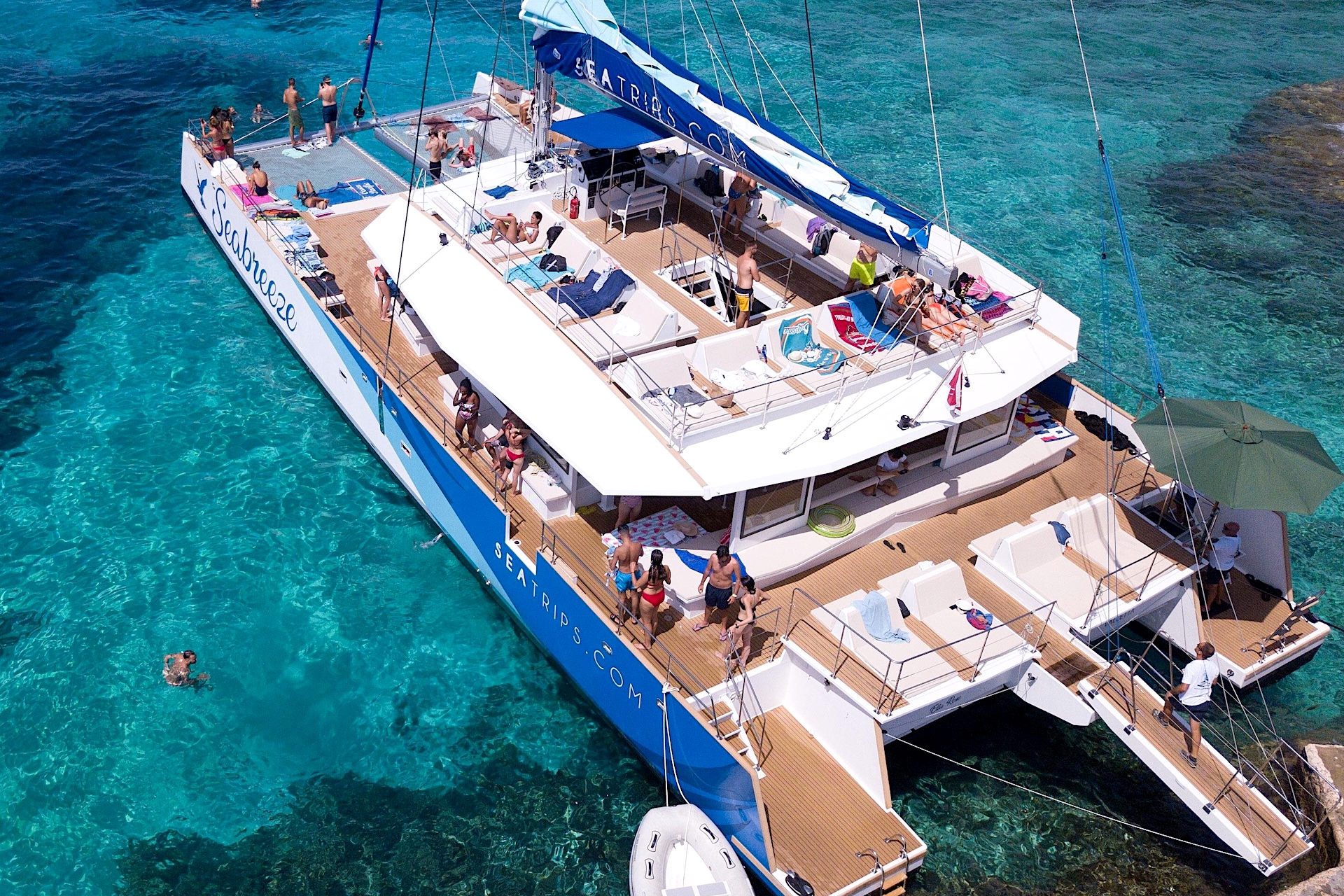
Finally, St Julian’s is rich in water sports: parasailing, jet ski or a Blue Lagoon cruise, the choice is yours. Guided tours of Malta also set off from St Julian’s.
Must-do activities in St Julian’s
History of St Julian’s
St Julian’s takes its name from a chapel dedicated to Saint Julian the Hospitaller, built in the late 16th century on the hill overlooking Spinola Bay. For centuries, San Ġiljan was no more than a modest fishing village clustered around its bay, extended in the 17th century by the Spinola palace and gardens, whose name has stayed with the harbour.
Everything changed with tourism. From the 1960s, the seafront setting, the sheltered bays and the closeness to Sliema drew hotels, restaurants and nightlife. In some thirty years, the village became the archipelago’s main seaside resort: Paceville turned into the heart of the party scene, Portomaso rose from the ground with its marina and Malta’s first tower (2001), and the cranes never left the skyline.
Today’s town embraces that identity: dense, vertical, geared towards entertainment, crowned since 2023 by Zaha Hadid’s Mercury Tower. Yet traces of old San Ġiljan remain, starting with the church of Our Lady of Mount Carmel, still watching over the luzzu of Spinola Bay.
- v. 1580 Chapel of Saint Julian, the origin of the village’s name
- 1891 San Ġiljan becomes a parish in its own right
- 1960 Tourism takes off: the fishing village transforms
- 2001 Portomaso and its marina, Malta’s first tower
- 2023 Opening of the Mercury Tower (Zaha Hadid), 121 m
Where is St Julian’s and how to get there
St Julian’s lies on Malta’s east coast, just north of Sliema, whose long seafront promenade it extends. The town stretches along a succession of bays, from Balluta to St George’s Bay via Spinola, and climbs inland towards the Paceville and Swieqi plateaus. Balluta Bay, the first bay on the Sliema side, has a small man-made sandy beach and the elegant neo-Gothic Balluta church. Malta International Airport is about a dozen kilometres away, in Luqa.
The bus is the easiest way to reach St Julian’s. Many routes serve the town and Paceville from the Valletta terminus, the airport, Sliema and the north of the island; the ticket, valid for two hours including transfers, is bought from the driver.
From Sliema, the nicest option is to walk: about twenty minutes along the seafront promenade are enough to reach Balluta and then Spinola. By car, it’s best to avoid Paceville in the evening (heavy traffic and scarce parking); the Bolt, eCabs and Uber apps quote the fare before you ride.
A few direct connections to St Julian’s and Paceville (times from the Malta Public Transport journey planner, June 2026):
* Summer fare Jun–Oct (€2.00 the rest of the year)
Calculate the current journey time on Malta Public Transport
When to visit St Julian’s and how long to stay
St Julian’s can be visited year-round, but late spring (May-June) and September offer the best balance: warm sea, lively terraces and still-reasonable crowds. In July and August the town runs at full tilt, beaches and bays included; aim for the morning to swim, for instance at the small St George’s Bay beach. Paceville’s nightlife, for its part, has no low season: it’s in full swing every weekend, and every night in summer.
- February Malta Carnival : floats, costumes and confetti, celebrated across the island in the week before Lent.
- July Paceville summer nights : from June to September the party district runs at full tilt, with open-air nights and packed clubs every weekend.
- August Feast of San Ġiljan : the patron-saint feast, on the last Sunday of August: procession, brass bands, decorations and fireworks over Spinola Bay.
- December New Year’s Eve : Paceville turns into a huge street party to ring in the new year, one of Malta’s most popular gatherings.
How long to plan for? Half a day is enough to walk the seafront from Balluta to St George’s Bay, with time for a coffee in Spinola and a photo at the Love Monument. But St Julian’s is above all a base: very well connected, full of hotels and restaurants, it serves as a day-and-night camp for many travellers, who then branch out to Valletta, Mdina or the Blue Lagoon.
Where to stay in St Julian’s
St Julian’s offers a wide variety of accommodation for every budget. One thing to bear in mind: if you plan to stay near Paceville, check the reviews on your future room’s soundproofing, as the district is very noisy once night falls.
For travellers after a prestigious stay in St Julian’s, the town counts 11 five-star hotels. Among them all, the pink-clad Westin Dragonara Resort remains Malta’s iconic luxury hotel, even if two recently opened properties, the ME Malta and the Hard Rock Hotel, are now giving it a run for its money.
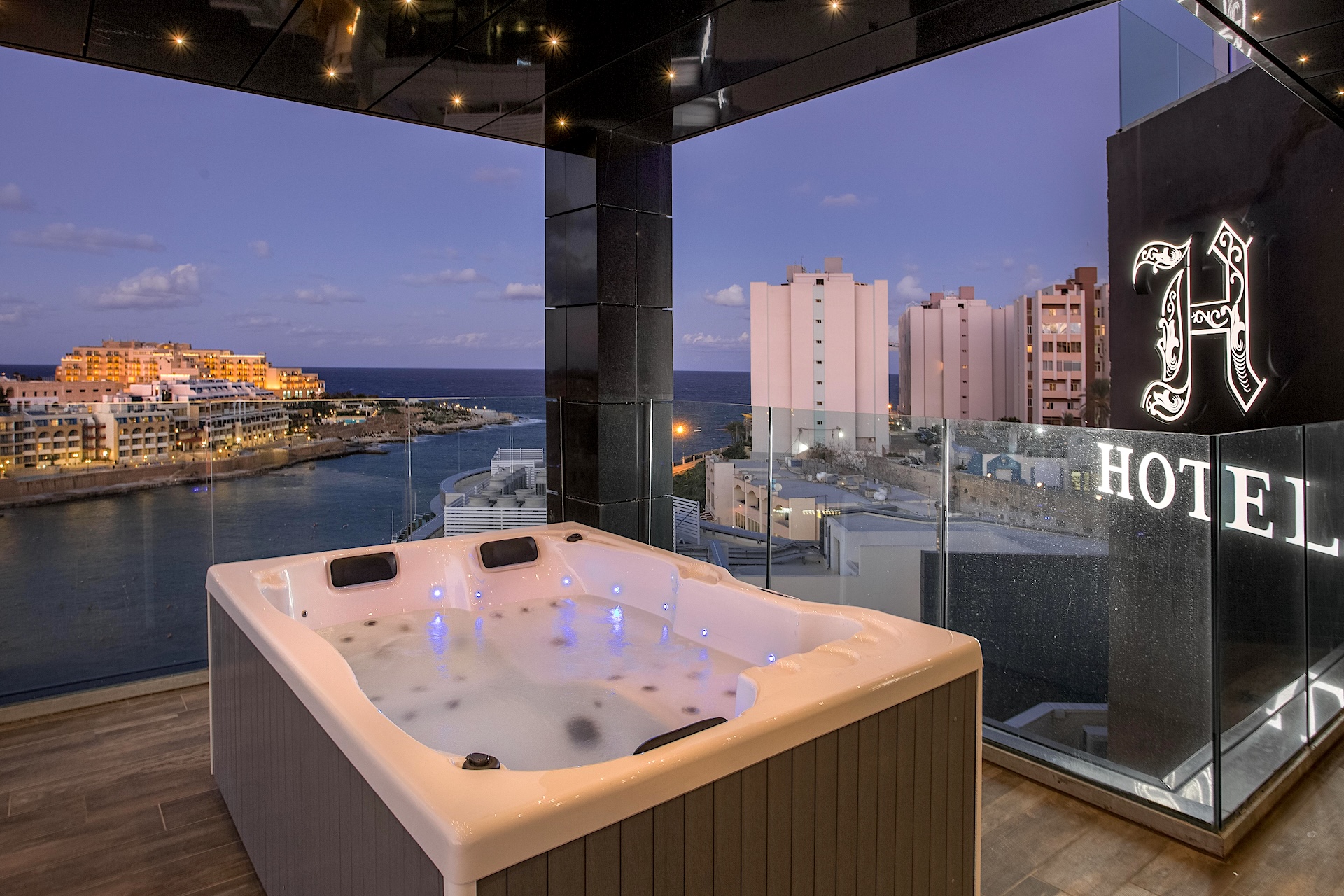
For an upgraded, comfortable stay, St Julian’s also has a wide range of four-star hotels, often very affordable off-season: great value for a trip to Malta. One stands out without a doubt: the H Hotel, a one-of-a-kind property with striking design and atmosphere.
The town is also home to more than twenty three-star hotels, plus as many boutique hotels of a similar standard: places whose prices and quality vary widely.
Finally, it offers 4 youth hostels, affordable dorm-room options, ideal for young adults passing through the archipelago:
- Hostel Malti Budget
- Marco Polo Party Hostel
- Bookarest Hostel Malta
- The Rose Hostel
Worth noting, though: off-season, St Julian’s youth hostels sometimes cost more than some three-star hotels.
The most popular hotels in St Julian’s among travellers
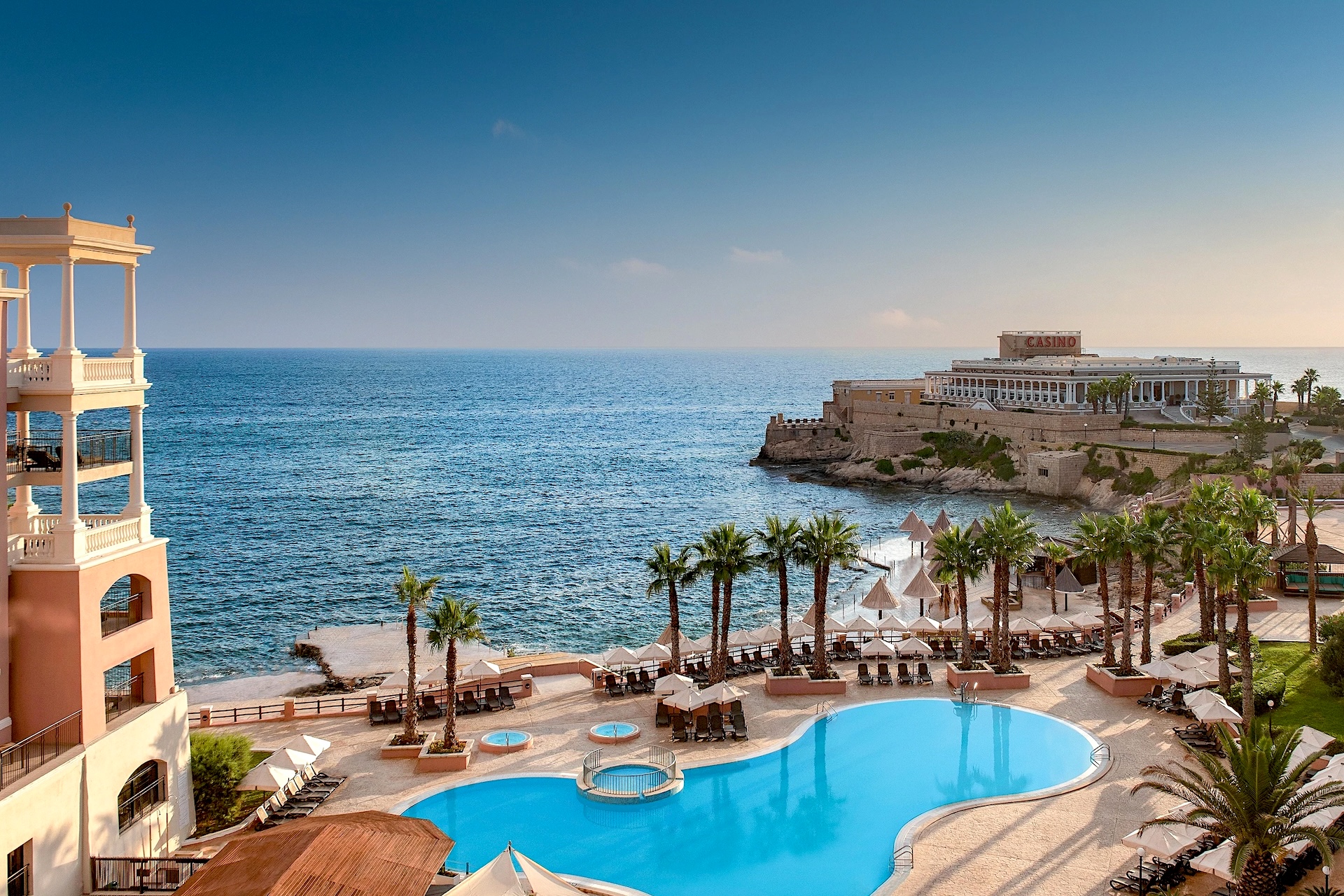
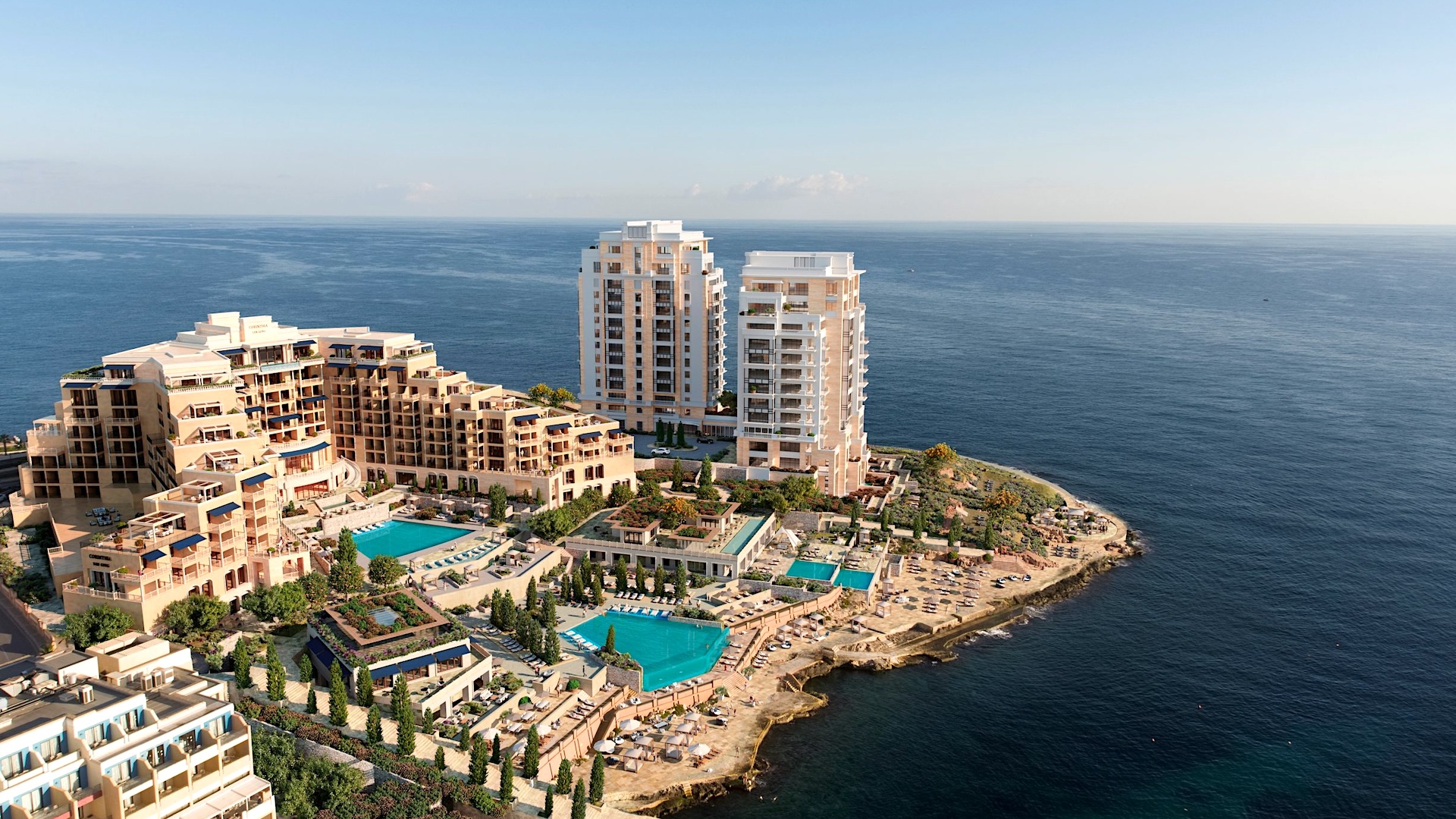
Where to eat in St Julian’s
At Spinola Bay, the terraces line the water’s edge (CUBA, Gululu, San Giuliano, MÉŻ): the perfect spot for brunch, a drink or dinner facing the luzzu. It’s also a good place to try fenek, Maltese-style rabbit, the island’s signature dish. Over at Portomaso, the mood turns chicer, around fine-dining tables lining the marina.
Paceville, meanwhile, runs on fast food and the post-night-out kebab. For a view from above, several rooftops open their pool and bar to the panorama (the Infinity at Hugo’s, the FLO Skypool, the SKYBEACH at the InterContinental), often accessible without being a hotel guest.
Around St Julian’s
Sliema
The bustling seafront just to the south, continuing the promenade: shopping, cafés and the ferry to Valletta.
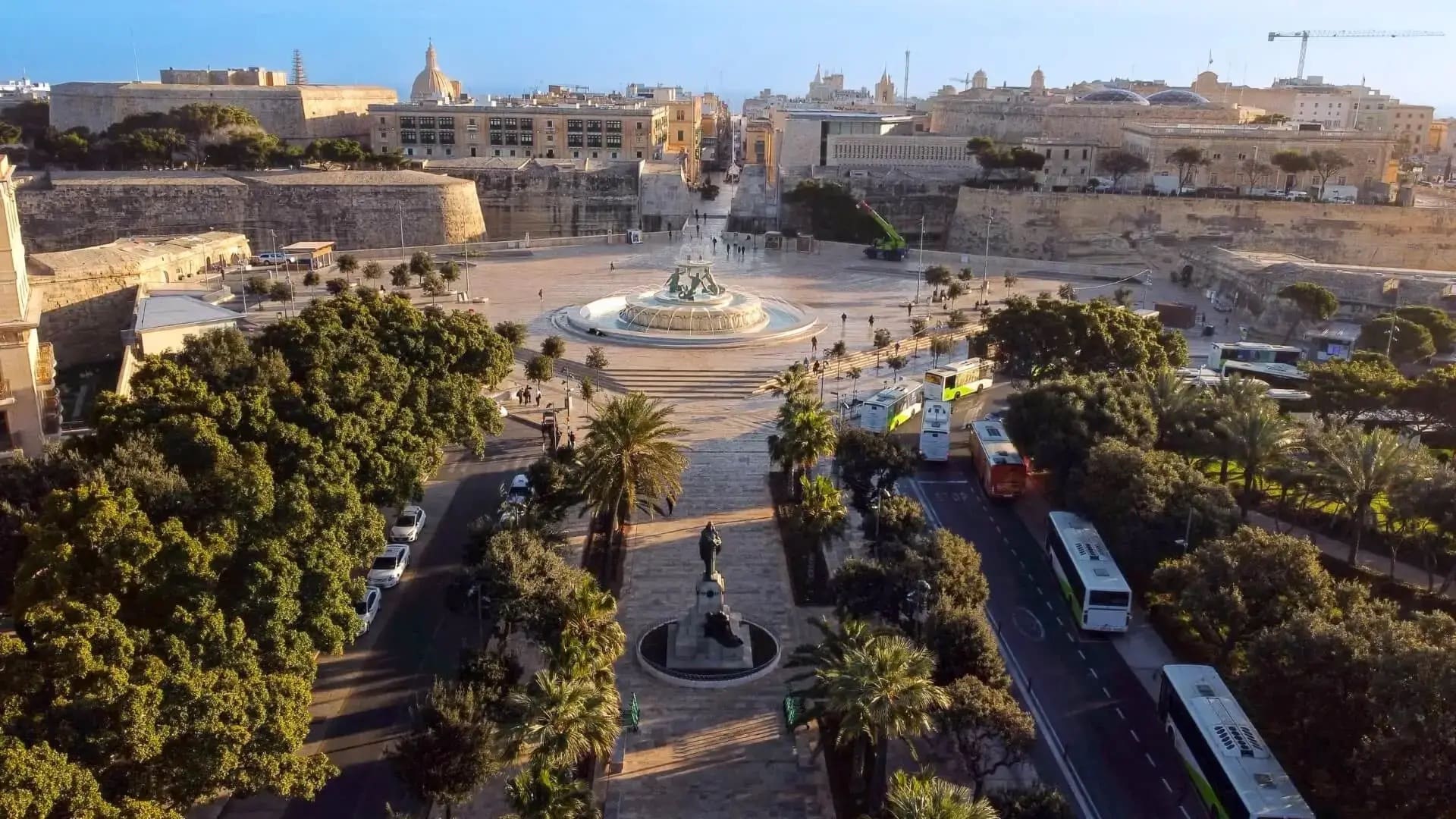
Valletta
The capital and its ramparts, about twenty minutes away by bus, or by ferry from Sliema right next door.
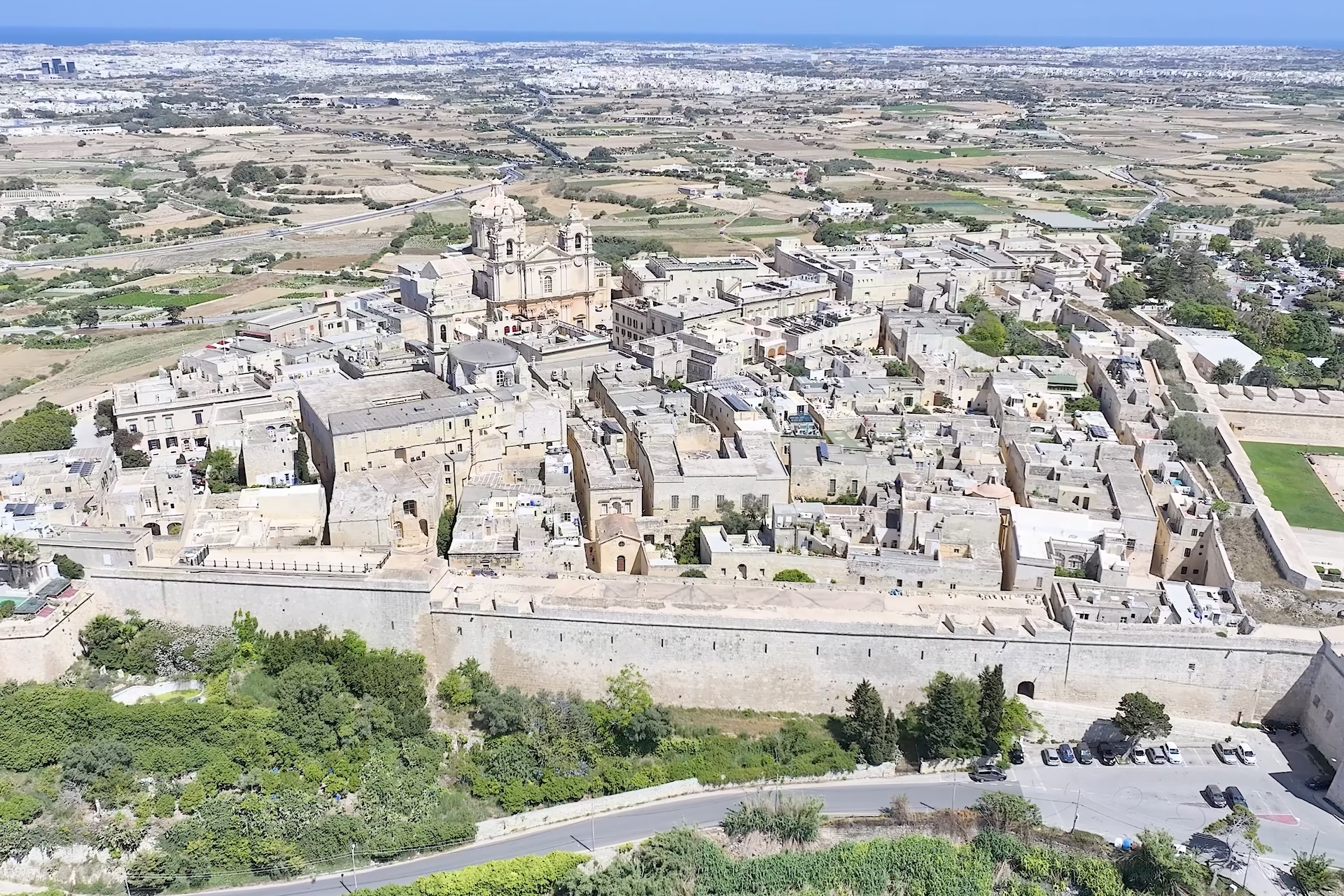
Mdina, the silent city
The old fortified capital, the absolute counterpoint to the bustle of St Julian’s, about thirty minutes away.
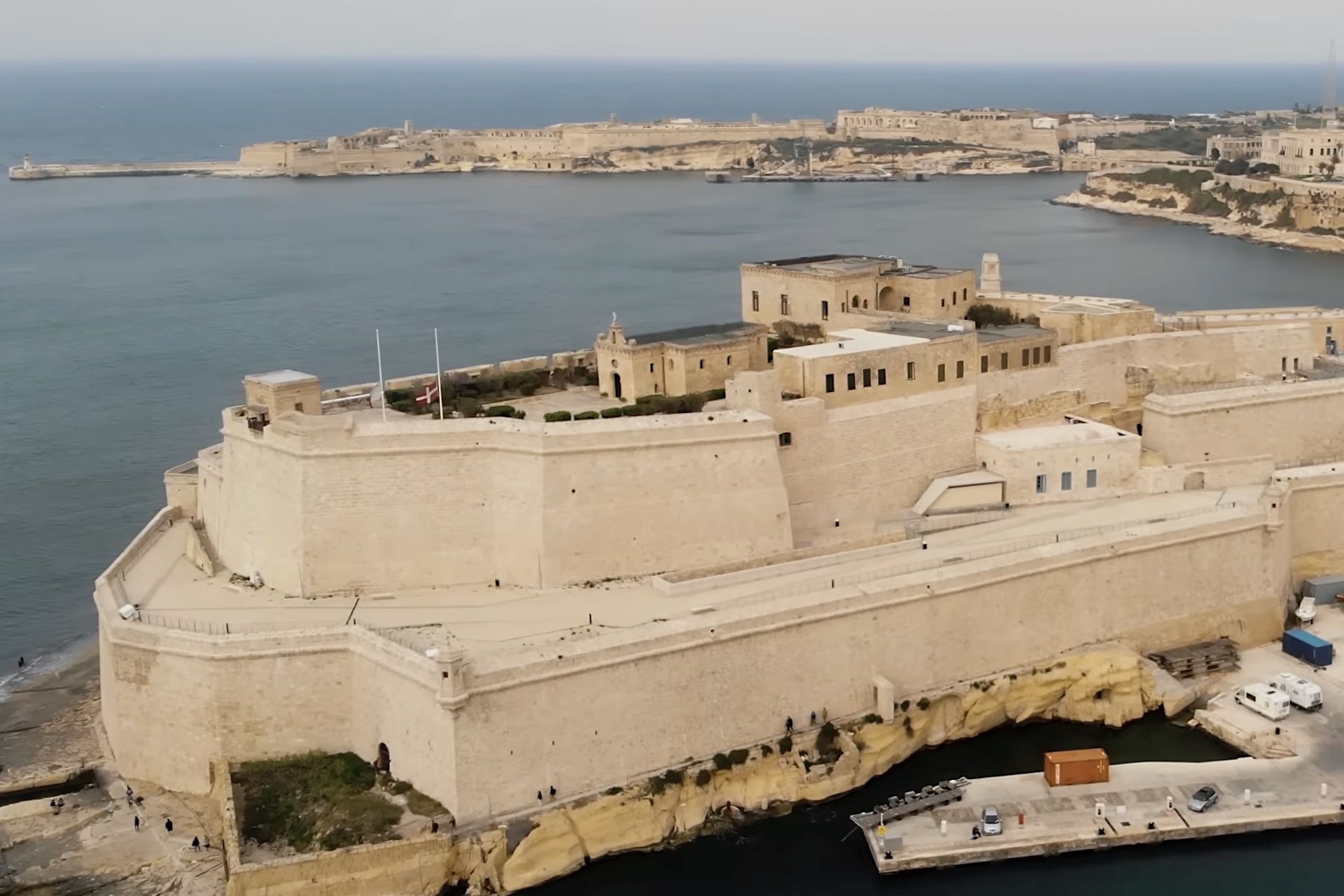
The Three Cities
Birgu, Senglea and Cospicua, the fortifications that predate Valletta, facing the capital across the Grand Harbour.
Our verdict on St Julian’s
St Julian’s divides opinion, and that’s fair enough: you don’t come here for the charm of an old Maltese village, but for the energy of the island’s liveliest resort. Seen that way, it delivers. The Spinola seafront at sunset is a genuine postcard; water sports reign; the choice of hotels, restaurants and bars is unrivalled in Malta; and its location, right next to Sliema and fifteen minutes from Valletta, makes it an ideal base.
The flip side is just as clear. The town is a permanent building site, bristling with cranes, and its runaway development has erased much of its fishing-port past. It is also overrun by language-trip students in high season, turning Paceville and its surroundings into one big holiday camp. Paceville is a fantastic playground for under-30 night-owls, but literally a nightmare for travellers seeking quiet: noise, tipsy crowds and unapologetic concrete. The beaches, finally, amount to very little. To each their own: St Julian’s rewards those who come for the buzz and will delight younger travellers under thirty, but will probably be a bit too hectic for more mature visitors.
What we love
- The Spinola Bay seafront at sunset, luzzu and Love Monument included
- Malta’s capital of water sports (parasailing, jet ski, flyboard, diving)
- Paceville, the island’s undisputed nightlife epicentre
- The densest choice of hotels in Malta, including around ten five-stars
- A central base, right next to Sliema and 15 minutes from Valletta
Worth knowing before you go
- A building-site town, bristling with cranes and endless concrete
- Paceville very noisy at night (mind the hotels’ soundproofing)
- The charm of the old fishing village has largely vanished
- Few and cramped beaches (St George’s Bay quickly packed)
- Very touristy, at times artificial, far from authentic Malta
Frequently asked questions about St Julian’s
Where is St Julian’s?
On Malta’s east coast, just north of Sliema, whose seafront promenade it extends. The town stretches along several bays (Balluta, Spinola, St George’s Bay) up to the Paceville district.
What is there to do in St Julian’s?
Enjoy the Spinola seafront, try water sports at St George’s Bay, go out in Paceville, stroll around the Portomaso marina and shop at the Mercury Tower. The details are in the « What to do » section above.
Is there a beach in St Julian’s?
Yes, but they are small: the main one is St George’s Bay, a sandy beach just below Paceville. Balluta Bay also has a small man-made sandy beach.
Where to go out at night in St Julian’s?
In Paceville, Malta’s party district: dozens of bars and clubs packed into a few streets, buzzing seven nights a week. It’s the under-30s’ favourite, but the noise runs intense until the early hours.
Where to stay in St Julian’s?
The town has Malta’s widest choice of hotels, from five-star (Westin Dragonara, Corinthia, Hilton, Hyatt, InterContinental, ME by Meliá…) to youth hostels. Near Paceville, check the soundproofing before booking.
How do you get to St Julian’s?
By bus, via many routes from Valletta, the airport, Sliema and the north of the island. From Sliema, about twenty minutes’ walk along the seafront is enough.
St Julian’s or Sliema: where to stay?
The two adjoin and share the same promenade. Sliema is more about shopping and a little quieter; St Julian’s concentrates the nightlife (Paceville) and the big hotels. To party, choose St Julian’s; to sleep in peace, lean towards Sliema or a hotel away from Paceville.
St Julian’s in pictures