What language is spoken in Malta?
It is the question almost every traveller asks before setting off: what language do people actually speak in Malta? The islands have two official languages, English and Maltese, and you will also catch Italian, French or Spanish in everyday conversation. Here is where each one is spoken, and why.
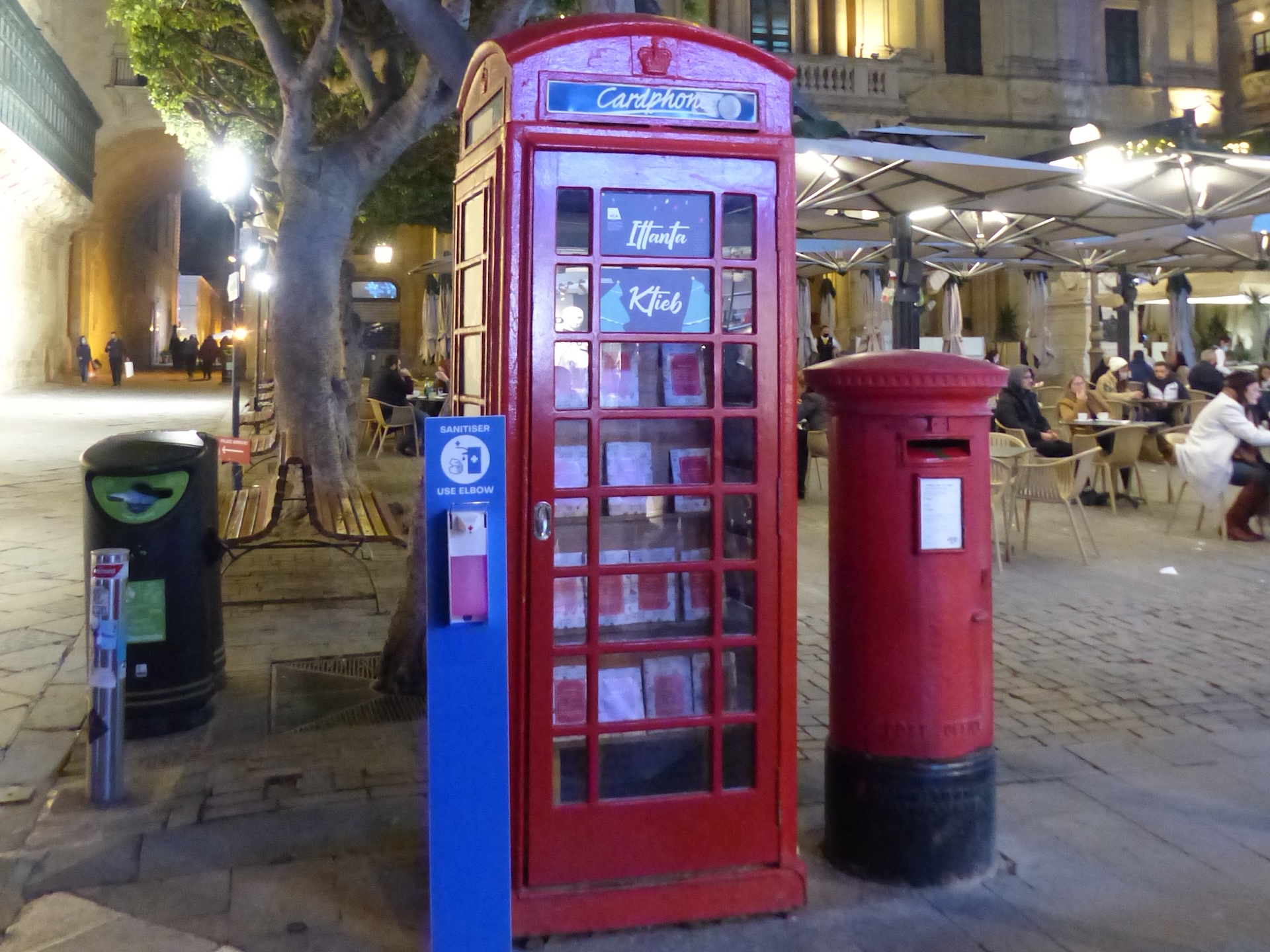
English and Maltese, Malta’s two official languages
English, the language you will hear most
Malta is a former British colony: the islands were part of the Empire from 1800 to 1964. English stayed on as one of the two official languages, alongside Maltese.
Constitutionally, English comes second, after Maltese. In practice, though, it is the language you hear most, which goes a long way towards explaining the popularity of language courses in Malta.
English is the language of business, education and tourism all at once. With 4,022,310 visitors a year for 574,250 residents, it has taken over as the everyday language, at the expense of Maltese. The islands’ main daily newspaper, the Times of Malta, is published in English.
Malta is still one of the 56 member states of the Commonwealth. Contrary to a common misconception, however, it is no longer one of the 15 Commonwealth realms, unlike Canada, Australia or New Zealand, which still recognise Charles III as head of state.
Maltese, the national language
The national language and first official language of the Republic of Malta is Maltese, which its speakers call il-Malti. It is spoken by around 400,000 people, roughly 71% of residents, a share that keeps shrinking as the foreign-born population grows. Our page on Malta’s changing population sets out that shift in detail.
Its official status is more recent than you might think. For centuries it was Italian that ruled over Maltese administration, the courts and cultural life. Not until 16 August 1934 did the British authorities push it aside in favour of Maltese, promoted to official language alongside English. That decision closed the “Language Question” that had divided the islands since the 19th century.
Maltese then had to wait until 2004 and Malta’s accession to the European Union to join the EU’s 24 official languages.
The islands were colonised again and again, and the language carries a trace of every occupier. Maltese grew out of Sicilian Arabic; Sicilian, Italian, French and English influences were then layered on top. The standard dictionary bears this out: close to a third of its entries are Semitic in origin, a little over half come from Sicilian and Italian, and around 6% from English. Do not conclude from that, however, that Maltese is a Romance language: everyday words remain overwhelmingly Semitic, and the grammar is entirely so. It is now the only Hamito-Semitic (or Afro-Asiatic) language written in the Latin alphabet, and the only Semitic language with official status in the European Union.
Maltese is also spoken well beyond the islands: the waves of emigration of the 20th century scattered Maltese communities across Australia, Canada, the United Kingdom and the United States, where the language is still passed down within families.
The other languages spoken in Malta
English and Maltese dominate, but the islands are strikingly cosmopolitan: close to 29% of residents are not of Maltese origin, almost one in three. The Indian, Italian, French and Latin American communities are all well established, and hearing Hindi, Italian, French or Spanish in the street is nothing unusual. Italian holds a place of its own: close to two Maltese in three understand it, less through schooling than through decades of Italian television picked up from nearby Sicily. English, though, remains the language everyone shares.
Why is English spoken in Malta?
The mark left by the British Empire
In 1798, on his way to Egypt, Napoleon Bonaparte seized Malta. The archipelago has always held a strategic position in the Mediterranean. The Order of Malta, which governed the island at the time, surrendered to the French fleet without a fight.
Two years of requisitions, looting and coercive laws were enough to make Napoleon’s troops so unpopular that the Maltese called on France’s oldest rival for help: Great Britain.
The British drove the French out after a two-year blockade, then decided to keep the islands. Malta became a Crown colony in 1813, a status confirmed by the Treaty of Paris in 1814.
Independence would not come until 21 September 1964, followed by the proclamation of the Republic of Malta on 13 December 1974. The country stayed in the Commonwealth, with an elected president as head of state and English as part of the inheritance.
The most common words in Malta
Everyday vocabulary in English and Maltese
| English | Maltese | Pronunciation |
|---|---|---|
| Hello / Hi | Bonġu | BON-joo |
| Yes / No | Iva / Le | EE-va / leh |
| Today | Illum | il-LOOM |
| Tomorrow | Għada | A-da |
| Please | Jekk jogħġbok | yek YOJ-bok |
| Thanks | Grazzi | GRAT-si |
| How much is it? | Kemm? | kem |
| How are you? | Kif inti? | kif IN-tee |
| Bye / Goodbye | Saħħa | SAH-ha |
What does “Mela” mean?
Mela, or mela mela, is probably the most emblematic expression in Malta. The Maltese use it constantly in speech, both in Maltese and to punctuate a sentence in English.
It has no precise meaning. Depending on context and intonation, it can stand for “all right”, “of course”, “well then”, “that is enough” or “sounds good”. Hear it often enough and you will start using it yourself.